
Struggling to focus or remember things while still getting everything done? Learn how high-functioning depression causes brain fog and how to improve it.
Introduction
Do you often forget simple things, lose your focus, or feel like your mind is moving in slow motion? If this happens regularly, it is not due to lack of sleep or a busy routine but something more. For some people, high-functioning depression and brain fog can happen together. It is difficult to think clearly while still keeping up with work, school, or family responsibilities when a person faces high-functioning depression and brain fog.
Brain fog can make everyday tasks feel harder for a person. You may struggle to concentrate, remember information, or make simple decisions, even though you look completely fine to others. In this article, you’ll learn why high-functioning depression and brain fog are connected, what symptoms to watch for, and practical ways to improve your mental clarity and overall well-being.
| High-functioning depression and brain fog are often connected. While high-functioning depression mainly affects mood, brain fog affects how clearly you think. Many people experience poor concentration, forgetfulness, slow thinking, and mental fatigue while still managing their daily responsibilities. |

What Is Brain Fog?
Brain fog is not a medical condition. It is a term people use to describe problems with thinking clearly, remembering information, or staying focused. Many people say it feels like their mind is “cloudy” or slower than usual.
Brain fog can happen for many reasons, including stress, poor sleep, anxiety, certain medical conditions, and depression. It is difficult to concentrate during conversations, forget simple things, or struggle to make decisions. While brain fog can be frustrating, it is usually a sign that something is affecting your mental or physical health.
Can High-Functioning Depression Cause Brain Fog?
Many people think depression only affects emotions, but it can also affect how the brain works. Even if you continue to work, study, or manage daily responsibilities, you may notice that your thinking feels slower than usual. You might struggle to focus, forget small things, or have trouble making simple decisions. These changes can happen because continuous depression affects your energy, concentration, and ability to process information.
Brain fog does not happen to everyone with high-functioning depression, but it is a common symptom. It may become worse during periods of stress, poor sleep, or emotional exhaustion. Some people blame themselves for being “lazy” or “unmotivated” when their brain is under constant emotional stress. It is important to recognize this connection because treating depression and improving healthy habits can often help reduce brain fog and improve mental clarity over time.
Why Does High-Functioning Depression Cause Brain Fog?
Many people with high-functioning depression don’t just feel sad, but their mind is also not working the way they used to. They forget simple things, lose focus easily, or need more time to finish everyday tasks. This happens because depression can affect both your emotions and the way your brain processes information. Several factors can make brain fog worse.
Changes in Brain Chemistry
The brain uses natural chemicals to control mood, memory, and concentration. When a person is living with depression, these chemicals may not work as they normally do. As a result, it is harder to stay focused, remember things, or think quickly.
Chronic Stress and Mental Fatigue
Living with high-functioning depression can be exhausting. Even if you smile, go to work, and take care of your responsibilities, your mind may be carrying stress every day. Over time, this constant pressure can leave you mentally numb. When your brain is tired, it’s harder to concentrate, solve problems, or stay organized.

Poor Sleep Quality
Many people with high-functioning depression don’t get restful sleep. You may sleep for several hours, but still wake up feeling tired. When your brain doesn’t get enough quality rest, it becomes harder to focus, remember information, and think clearly during the day.
Emotional Overload
If you hide your emotions, it takes a lot of energy. Many people with high-functioning depression pretend everything is fine, even when they’re struggling inside. When your brain is busy dealing with emotional stress, it has less energy for memory, concentration, and clear thinking, which can lead to brain fog.
Common Brain Fog Symptoms in High-Functioning Depression
Brain fog can affect everyone differently, but many people notice small changes in their thinking before realization. You may still be able to work, study, or take care of daily responsibilities, but simple tasks start feeling harder than they used to. If these problems happen often and don’t improve, they may be linked to high-functioning depression.
Difficulty Concentrating
One of the most common signs of brain fog is finding it hard to stay focused. You may start reading something and realize you haven’t understood a single word. During conversations, your mind may wander, or you may lose track of what someone is saying. Even simple tasks at work or home can take much time because it’s difficult to keep your attention on one thing.
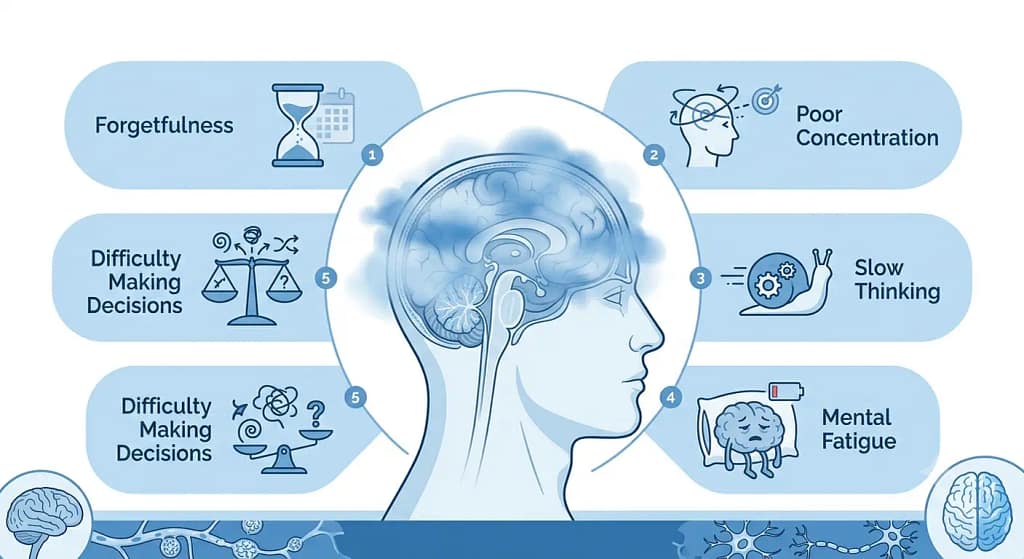
Forgetfulness
Brain fog can become a reason for forgetfulness. You might misplace your phone or keys, forget appointments, or walk into a room and forget why you went there. This doesn’t mean you have a poor memory. When your mind is under constant emotional stress, remembering small details becomes more difficult.
Slow Thinking
Many people describe a person’s mind work in slow motion due to brain fog. You may need extra time to understand information, answer questions, or complete tasks that once felt easy. It can feel frustrating because you know the answer, but your brain takes a long time to process it.
Trouble Making Decisions
Even simple choices can feel difficult when you’re dealing with brain fog. Deciding what to eat, replying to an email, or choosing between two options may take much longer than usual. You might overthink small decisions or avoid making them altogether because your mind feels mentally tired.
How High-Functioning Depression and Brain Fog Affect Daily Life
Brain fog can affect many parts of your daily life. Even if you’re still going to work, attending classes, or taking care of your family, simple tasks become more difficult. You may need extra time to finish work, lose your train of thought during conversations, or forget normal things.
Over time, these small struggles can become frustrating. You may start doubting yourself or feel like you’re not performing as well as before. Some people think they are becoming lazy or less capable, but that’s usually not the case. When high-functioning depression affects your ability to think clearly, everyday responsibilities can require much more mental effort.

Some common ways brain fog can affect daily life include:
- Taking longer to finish work or school tasks
- Forgetting appointments or important deadlines
- Losing focus during meetings or conversations
- Finding it hard to stay organized
- Feeling mentally tired even after a full night’s sleep
- Struggling to enjoy hobbies because it’s difficult to concentrate
If these problems continue for several weeks and begin affecting your work, relationships, or daily routine, it may be time to talk to a healthcare or mental health professional.
According to the American Psychiatric Association (APA), depression can interfere with cognitive functions such as attention, memory, and clear thinking. These changes can make everyday tasks feel more difficult, even when a person continues to manage their daily responsibilities.
High-Functioning Depression Brain Fog vs Normal Forgetfulness
Everyone forgets things from time to time. Misplacing your keys or forgetting someone’s name is normal. However, brain fog related to high-functioning depression is different because it happens more often and usually comes with other symptoms like low mood, mental exhaustion, and poor concentration.
Comparison Table
| Normal Forgetfulness | Brain Fog from High-Functioning Depression |
|---|---|
| Happens occasionally | Happens regularly and may last for weeks or months |
| Usually improves after rest | May continue even after sleeping well |
| Doesn’t affect daily life much | Can make work, study, and daily tasks more difficult |
| You remember things later | You may struggle to recall information even after trying |
| Focus returns quickly | Difficulty concentrating happens almost every day |
| Often caused by a busy day or a distraction | Often linked with ongoing depression, stress, or emotional exhaustion |
How to Improve Brain Fog
Healthy Sleep Habits
Good sleep helps your brain rest and recharge. When you don’t sleep well, it’s harder to focus, remember things, and think clearly. Try to go to bed and wake up at the same time every day, even on weekends. Avoid using your phone or consuming caffeine right before bed, as both can negatively impact your sleep quality. A relaxing bedtime routine can also help you wake up feeling more refreshed.
Exercise and Nutrition
Regular exercise improves blood flow to the brain and can boost your mood. Eating balanced meals with fruits, vegetables, whole grains, lean protein, and healthy fats also gives the best nutrients to your brain. Drinking enough water throughout the day is equally important, as dehydration can make brain fog worse.
Stress Management
In brain fog, it is harder to manage long-term stress. Taking short breaks during the day, practicing deep breathing, spending time in nature, or doing your favorite activities can help to relax your mind. Learning healthy ways can improve your focus and mental clarity over time.
Therapy and Professional Support
If brain fog continues for several weeks or starts affecting your work, relationships, or daily life, don’t ignore it. A licensed mental health professional can help identify whether depression, anxiety, stress, or another condition is contributing to your symptoms. Therapy can also teach practical coping skills and help you understand the underlying cause of your emotional struggles. In some cases, a healthcare provider may recommend additional treatment based on your individual needs.

When Should You See a Mental Health Professional?
If brain fog doesn’t improve or starts affecting your everyday life, it’s important to seek professional support. Getting help early can make recovery easy and prevent symptoms from becoming more difficult to manage.
You should consider speaking with a mental health professional if:
- Brain fog lasts for more than two weeks.
- You struggle to focus at work, school, or home.
- You feel sad, hopeless, or emotionally empty most days.
- Memory and concentration problems keep getting worse.
- Stress or low mood is affecting your relationships or daily routine.
- You’re not sure whether your symptoms are caused by stress, burnout, or depression.
A mental health professional can evaluate your symptoms, rule out other possible causes, and recommend the most appropriate treatment. You don’t have to wait until things become difficult—asking for help is a positive step toward feeling better.
If you’re in crisis, call or text 988 (US) immediately.
Conclusion
High-functioning depression and brain fog can make life more challenging. Difficulty concentrating, forgetfulness, slow thinking, and mental exhaustion are real symptoms that shouldn’t be ignored. While brain fog can have many causes, ongoing depression, stress, poor sleep, and emotional overload are common factors that may affect the way your brain works.
The good news is that brain fog is often manageable. Healthy sleep, regular exercise, stress management, and professional support can all help improve mental clarity over time. If these symptoms last for several weeks or begin affecting your work, relationships, or daily life, don’t hesitate to seek help from a qualified mental health professional.
“Learn more about the signs of high-functioning depression and how it’s treated.
Frequently Asked Questions
Is it normal to have brain fog when depressed?
Yes. Brain fog is a common symptom of depression. With depression, many people find it harder to concentrate, remember information, or think clearly. These problems can happen because depression affects the brain’s ability to process information. If brain fog continues or interferes with daily life, it’s important to speak with a healthcare professional.
Can high-functioning depression affect your memory?
Yes, high-functioning depression can affect memory. Some people become more forgetful, lose focus during conversations, or have trouble remembering everyday tasks. These memory problems are often linked to ongoing stress, mental fatigue, and changes in how the brain processes information.
How do I know if my brain fog is caused by depression?
If your brain fog is accompanied by persistent sadness, low energy, loss of interest, poor concentration, or emotional exhaustion, depression may be a possible cause. Because brain fog can also result from other health conditions, a healthcare professional can help determine the underlying reason.
Can brain fog from depression go away?
Yes, brain fog can improve. When depression is properly managed, many people notice better focus, memory, and mental clarity. Healthy sleep, regular exercise, stress management, therapy, and professional treatment when needed can all support recovery. Improvement is usually gradual rather than immediate.
(This article is for educational and informational purposes only and should not be considered medical advice, diagnosis, or treatment.)
Brain fog often comes with other symptoms. See our guides on high-functioning depression and memory loss.

Sameya Salman is a writer at The Fit & Fresh who researches and writes about mental health and emotional well-being, with a focus on making topics like high-functioning depression easy to understand. She researches each article using trusted mental health sources to help readers recognize symptoms, understand treatment options, and feel less alone.