
Learn the key differences between high-functioning depression vs burnout, including symptoms, causes, treatment, and how to tell which one you may have.
Introduction
High-functioning depression vs burnout can be confusing because they look similar. Both can leave you feeling exhausted, unmotivated, and emotionally empty. The main difference is that burnout is usually caused by long-term stress, while high-functioning depression affects your mood and daily life even when stress isn’t the only reason. Understanding the difference can help you choose the right path to recovery.
What Is High-Functioning Depression?
High-functioning depression is a term commonly used to describe emotionally tired or internally disconnected feelings despite success. While it is not an official medical diagnosis, it refers to people who continue managing their daily responsibilities with ongoing depressive symptoms. Because they appear capable and productive, their emotional struggles often go unnoticed by others, as well as by themselves.
What Is Burnout?
Burnout is a state of physical, emotional, and mental exhaustion caused by long-term or unmanaged stress. It is most often related to work or caregiving responsibilities. According to the World Health Organization (WHO), burnout is a phenomenon develops from chronic workplace stress that has not been successfully managed. Burnout is generally linked to a specific source of stress rather than affecting every area of a person’s life.

| High-functioning depression and burnout may share symptoms like fatigue and low motivation, but they are not the same. Burnout is usually caused by chronic work-related stress and often improves when the stress is reduced. High-functioning depression involves persistent depressive symptoms that affect multiple areas of life, even when work or external stressors change |
| Feature | High-Functioning Depression | Burnout |
|---|---|---|
| Main cause | Multiple biological, psychological, and environmental factors | Chronic work or caregiving stress |
| Affects | Every area of life | Usually work or a specific stressor |
| Mood | Persistent low mood | Emotional exhaustion |
| Enjoyment | Often reduced in all settings | Usually returns away from work |
| Professional treatment | Often needed | May improve with stress reduction |
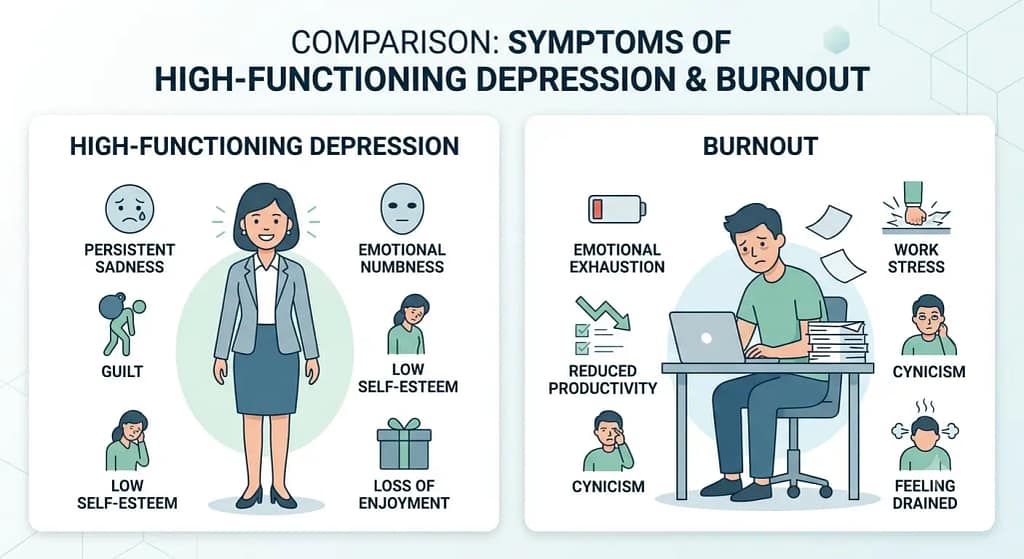
Signs More Common in High-Functioning Depression
People with high-functioning depression often look like they are doing just fine. They go to work, take care of their family, and handle their daily responsibilities. Because they keep showing fine, others may not notice anything is wrong. But inside, they may be struggling with emotions that don’t seem to go away. These feelings usually affect many parts of life, not just work.
Persistent sadness: You may feel sad or emotionally heavy, mostly without any reason. The feeling doesn’t disappear after a good day or a fun activity.
Feeling empty: Instead of crying or looking upset, some people simply feel empty inside. Life may seem dull, and it’s hard to feel excited about anything.
Low self-esteem: Even if you work hard or achieve your goals, you may still feel like you’re not good enough. Small mistakes can make you doubt yourself.
Feeling guilty: You may blame yourself for things that aren’t your fault or feel guilty for taking a break, saying no, or not meeting your own high expectations.
Losing interest in things you once enjoyed: Hobbies, spending time with friends, or favorite activities don’t give you happiness.
Emotional numbness: Sometimes, it’s not sadness at all. You may simply feel disconnected from your emotions, as if you’re just going through the motions without really enjoying life.
Signs More Common in Burnout
Burnout usually happens after dealing with too much stress for a long time, especially at work. At first, you may think you’re just tired, but over time, the stress can leave you feeling mentally and physically exhausted. The good news is that burnout often gets better when the source of stress is reduced.
Emotional exhaustion: You wake up feeling tired, and by the end of the day, you have nothing left to give. Even simple tasks can feel overwhelming.
Feeling drained after work: After work, you may have no energy for family, hobbies, or social activities. All you want to do is rest.
Negative feelings about work: A job you once enjoyed may start to feel frustrating or meaningless. You may become impatient with coworkers or lose interest in your responsibilities.
Reduced work performance: It becomes harder to focus, stay organized, or finish tasks. You may notice you’re making more mistakes than usual.
Feeling disconnected from your job: You may start doing the minimum required just to get through the day because your motivation has faded.
Can You Have High-Functioning Depression and Burnout at the Same Time?
Yes, it is possible to have both high-functioning depression and burnout at the same time. In fact, they often overlap because they share symptoms like tiredness, low motivation, trouble concentrating, and feeling emotionally drained. This can make it difficult to tell which condition is causing your symptoms.
Burnout usually begins after long-term ongoing stress, often related to work or caregiving. On the other hand, High-functioning depression affects many areas of life, not just your job. If someone already has high-functioning depression, dealing with constant stress at work can push them toward burnout. At the same time, severe burnout can make depressive symptoms feel even stronger, creating a cycle that is hard to break.
For example, imagine someone who works long hours and never takes a break. They start feeling exhausted and lose interest in their job, which are common signs of burnout. But even after taking a vacation, they still feel empty, struggle to enjoy time with family, and wake up feeling hopeless every day. In this case, burnout alone may not explain all of their symptoms, and high-functioning depression could also be present.
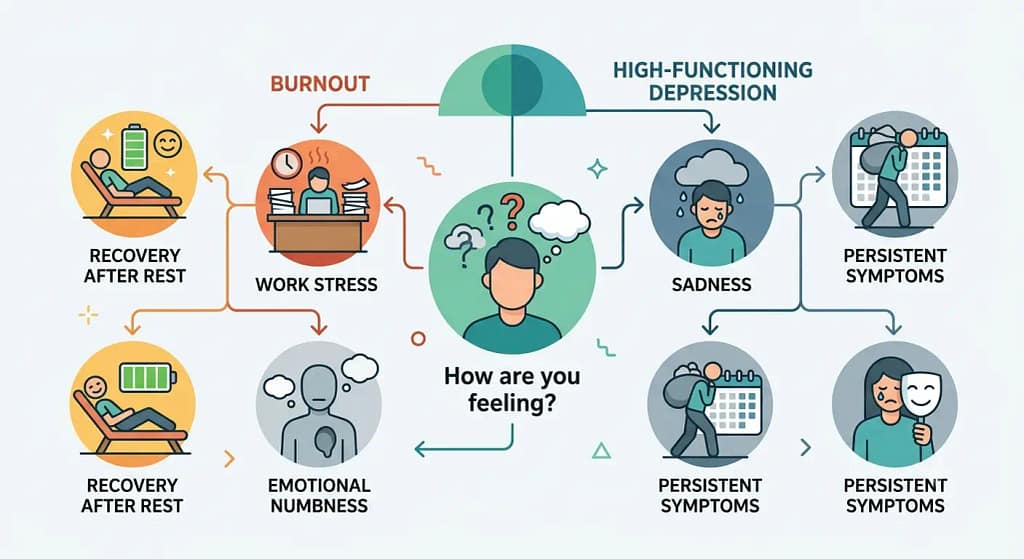
High-Functioning Depression vs Burnout: Real-Life Examples
Real-life situations can make it easier to understand the difference between high-functioning depression and burnout. Here are three simple examples from real life.
Office Professional
John works long hours in the office and feels exhausted every day. After taking a week’s vacation, he feels refreshed and motivated again. This is more likely to be burnout. But if John still feels empty, loses interest in life, and struggles with low mood even after rest, he faces high-functioning depression.
Parent or Caregiver
Maria spends most of her time caring for her children and elderly parents. She feels worried and emotionally numb. When her family helps, and she gets some rest, she starts feeling better, which suggests burnout. If those feelings continue despite getting support, it could be high-functioning depression.
College Student
Alex feels stressed and tired during final exams. After the semester ends, the stress goes away, and he enjoys life again. This points to burnout. If he still feels sad, disconnected, and has no interest in activities weeks later, high-functioning depression may be a better explanation.

How to Tell Which One You May Be Experiencing
It is difficult to recognize the difference between high-functioning depression and burnout because they share many of the same symptoms. Asking yourself a few simple questions can help you understand burnout vs high-functioning depression. This checklist is not a medical diagnosis, but it can help you decide whether it’s time to seek professional advice.
Simple Decision Checklist
| Ask Yourself… | More Likely Burnout | More Likely High-Functioning Depression |
|---|---|---|
| Do you only feel exhausted because of work? | ✅ Yes | ❌ No, the exhaustion affects all areas of life. |
| Do your symptoms improve on weekends or vacations? | ✅ Usually yes | ❌ They often continue even after rest |
| Do you still enjoy your hobbies and spending time with loved ones? | ✅ Yes, once you’re away from work. | ❌ No, you don’t enjoy your past activities |
| Do you feel emotionally numb or empty most of the time? | ❌ Not usually | ✅ Yes, even when life seems to be going well. |
| Have your symptoms lasted for more than two weeks? | ❌ They may improve when stress is reduced. | ✅ They often continue for weeks or even months. |
| Do your feelings affect every part of your life, not just work? | ❌ Mostly work or caregiving. | ✅ Yes, including relationships, hobbies, and daily life. |
What Your Answers May Mean
If you answered “Yes” to most of the questions in the Burnout column, your symptoms may be related to chronic stress or work overload. If your answers match the High-Functioning Depression column, your symptoms may go beyond stress and anxiety could be affecting your overall mental health.
Remember, this checklist is only a guide. If your symptoms are persistent, getting worse, or making daily life difficult, talk to a mental health professional. A proper evaluation is the best way to understand what you’re experiencing and find the right support.
Treatment and Recovery
The best treatment depends on whether you’re dealing with burnout, high-functioning depression, or both. Although these conditions share some symptoms, they are treated differently. Knowing the difference can help you choose the right steps toward recovery.

Managing Burnout
Burnout is often linked to continuous stress, so recovery focuses on reducing that stress and giving your mind and body time to recover. Small changes can make a big difference when made consistently.
- Take regular breaks: Give yourself time to recharge during the day instead of working nonstop.
- Set healthy boundaries: Learn to say “no” to extra responsibilities when your workload is already full.
- Reduce your workload whenever possible: discuss with your employer, share responsibilities, or adjust your schedule to reduce constant pressure.
- Make self-care a priority: Get enough sleep, eat balanced meals, exercise regularly, and spend time doing activities you enjoy.
- Take time off when needed: A short break or vacation may help you recover if work-related stress is the main cause of your symptoms.
Managing High-Functioning Depression
Recovering from high-functioning depression usually requires more than just rest. Since it affects your thoughts, emotions, and daily life, treatment often focuses on improving your mental well-being over time.
- Talk to a therapist: Therapy can help you understand your emotions, identify negative thinking patterns, and develop healthy coping skills.
- Build healthy daily habits: Regular exercise, quality sleep, nutritious meals, and a consistent routine can support your mental health.
- Stay connected with others: Spending time with trusted friends or family can reduce feelings of loneliness and provide emotional support.
- Medication may help: Some people benefit from antidepressant medication, but this decision should always be made with a qualified healthcare provider.
- Seek professional guidance: If your symptoms continue for several weeks or begin affecting your work, relationships, or daily life, don’t wait to ask for help. Early treatment often leads to better recovery.
Recovery Takes Time
Whether you’re experiencing burnout, high-functioning depression, or a combination of both, recovery doesn’t happen overnight. Be patient with yourself and focus on taking one step at a time. If you recognize your symptoms early and seek the right support, it is easier to retain your energy, improve your mental health, and enjoy daily life again.
When Should You Seek Professional Help?
Feeling stressed or emotionally numb from time to time is normal, but ongoing symptoms shouldn’t be ignored. If you’re not feeling better after getting enough rest or reducing stress, it may be time to speak with a mental health professional. Getting help early can make recovery easier and prevent your symptoms from becoming more severe.
You should consider seeking professional help if:
- Your symptoms last for two weeks or longer. Feeling constantly sad, exhausted, or emotionally numb for an extended period may be a sign of temporary stress.
- Daily life is becoming harder to manage. If your symptoms are affecting your work, studies, relationships, or everyday responsibilities, professional support can help you understand what’s happening.
- You feel hopeless or lose interest in life. If you no longer enjoy your favorite activities or feel like things will never get better, don’t ignore those feelings.
- You have thoughts of self-harm or suicide. Seek immediate help from a mental health professional or your local emergency services. You don’t have to face these thoughts alone, and support is available.
- You’re unsure whether it’s burnout or high-functioning depression. Because these conditions share many symptoms, it can be difficult to tell the difference on your own. A qualified mental health professional can provide a proper evaluation and recommend the most appropriate treatment.
Remember, asking for help is not a sign of weakness—it’s a step toward feeling better. Whether you’re experiencing burnout, high-functioning depression, or both, the right support can help you recover and improve your quality of life.
Conclusion
Understanding the difference between high-functioning depression and burnout is the first step toward getting the right support. While both can leave you feeling exhausted and emotionally numb, burnout is usually linked to stress, whereas high-functioning depression affects many areas of life and often continues even after the stress is gone. If your symptoms are persistent and disrupt your daily life, don’t ignore them. Reaching out to a mental health professional can help you find the right diagnosis, treatment, and path to recovery. Early support can make a meaningful difference in your overall well-being.
Frequently Asked Questions
Is high-functioning depression the same as burnout?
No. High-functioning depression and burnout are different conditions, although they share some symptoms like tiredness and low motivation. Burnout is usually caused by ongoing work or caregiving stress, while high-functioning depression affects many areas of life and often continues even when the stressful situation has ended.
Can burnout turn into high-functioning depression?
Burnout does not directly become high-functioning depression, but long-term unmanaged burnout may increase the risk of developing depression in some people. If your symptoms continue even after reducing stress or taking time off, it’s important to speak with a mental health professional for a proper evaluation.
How can I tell if I have burnout or high-functioning depression?
A simple way to tell the difference is to look at where your symptoms come from and whether they improve with rest. Burnout is usually linked to a specific source of stress, such as work, and often gets better after a break. High-functioning depression affects your mood, relationships, and daily life even when you’re away from work or on vacation.
What is the best treatment for high-functioning depression and burnout?
The best treatment depends on the underlying cause. Burnout often improves with stress management, healthy boundaries, rest, and changes to workload. High-functioning depression may require therapy, lifestyle changes, strong social support, and, in some cases, medication prescribed by a healthcare provider. Getting the right diagnosis is the first step toward effective treatment.
This article is for educational and informational purposes only and should not be considered medical advice, diagnosis, or treatment. The information provided is not a substitute for professional healthcare guidance.

Sameya Salman is a writer at The Fit & Fresh who researches and writes about mental health and emotional well-being, with a focus on making topics like high-functioning depression easy to understand. She researches each article using trusted mental health sources to help readers recognize symptoms, understand treatment options, and feel less alone.