
Learn effective treatment for high-functioning depression, including therapy, lifestyle changes, coping strategies, and professional support for better mental health.
(This article is for informational and educational purposes only and does not replace professional medical or mental health advice.)
In This Blog
Introduction
Do you seem successful on the outside but feel emotionally exhausted on the inside? If so, you may be dealing with high-functioning depression.
Many people with high-functioning depression continue to work, care for their families, and manage daily responsibilities while silently struggling with sadness, low motivation, stress, or emotional burnout.Because they appear productive and capable, their struggles often go unnoticed by others.
The good news is that effective treatment for high-functioning depression is available. Therapy, healthy lifestyle changes, stress management techniques, and professional support can help improve emotional well-being and make daily life feel more manageable.
In this guide, you’ll learn about treatment options for high-functioning depression, practical coping strategies, and ways to support long-term mental health and recovery.
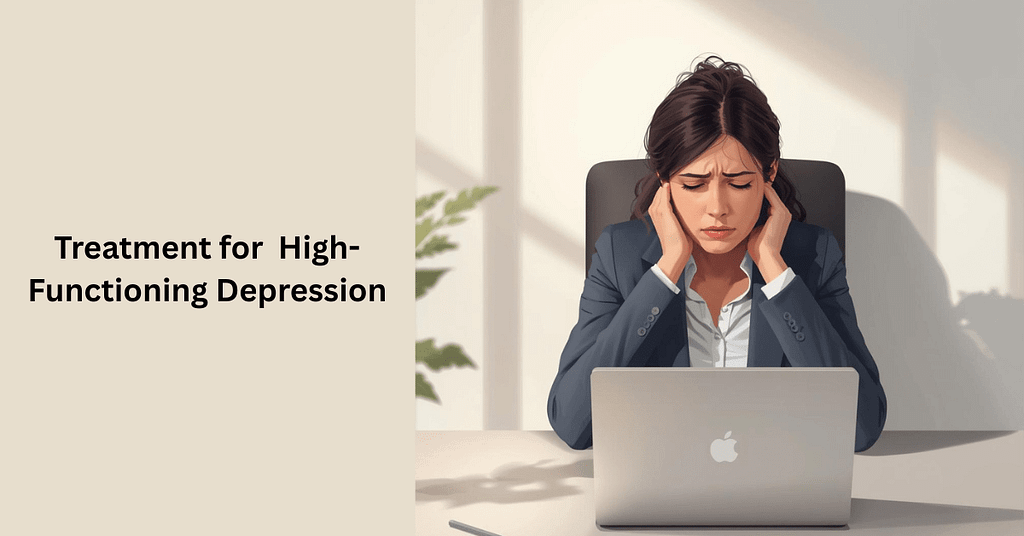
| Treatment for high-functioning depression usually includes psychotherapy (talk therapy), healthy lifestyle changes, stress management, and, in some cases, medication. The right treatment depends on the person’s symptoms, overall health, and recommendations from a licensed mental health professional. |
What Treatment for High-Functioning Depression Really Means
When people hear the word “treatment,” they often think something is “seriously wrong.” That’s not true. Living with high-functioning depression does not mean weakness. It means you are paying attention to your mental health.
Treatment also does not mean you are in a crisis. Many people seek help while still working, parenting, and managing daily life. Wanting support is a healthy step, not a last option.
In simple terms, treating high-functioning depression focuses on feeling better. The goal is balance, not labels.
Treatment often aims to support:
- Emotional balance, so moods feel more stable
- Less mental and emotional tiredness
- Sustainable mental health, not just short-term relief
These goals are common across many treatment options for high-functioning depression, especially when stress or burnout has lasted a long time.
Treatment Goals for High-Functioning Depression
The most effective treatment plans provide everyday relief.
Key goals include:
- Feeling less numb and more emotionally present
- Reducing constant emotional stress that builds up over time
- Reconnecting with joy and meaning, even in small ways
- Preventing long-term burnout or worsening depression
The best treatment for high-functioning depression supports your mental health without taking away your independence. It helps you function and feel better at the same time.
How to Manage High-Functioning Depression Often Goes Untreated
Many people with high-functioning depression don’t seek treatment right away. Because their struggle is easy to explain away. When life looks “fine” on the outside, it becomes hard to believe help is allowed or necessary.
“I’m Still Getting Things Done, So I Must Be Okay”
A common reason people delay treatment is productivity.
They wake up.
They go to work.
They care for others.
Because they are functioning, they assume they are fine.
But functioning does not mean feeling well. Many people keep moving while feeling emotionally weak inside. Staying busy can hide emotional distress, even from the person experiencing it. Over time, it can lead to deeper exhaustion and burnout.
Being productive only means you are coping—not that you are okay.
Comparing Your Pain to Others
Another reason high-functioning depression goes untreated is comparison.
People often tell themselves:
- “Others have it worse.”
- “I should be grateful.”
- “This isn’t serious enough.”
This way of thinking minimizes real emotional pain. Just because someone else is struggling differently does not mean your feelings don’t matter. Comparison often delays help and keeps people stuck in silence.
Fear of Being Dismissed or Not Taken Seriously
Many people worry that if they speak up, they won’t be believed.
This fear is especially common among:
- Professionals
- Parents
- Caregivers
- High-achieving individuals
When depression is quiet and hidden, it often goes unseen—but that does not make it less real.
Can High-Functioning Depression Be Cured?
Why “Cure” Is the Wrong Expectation
High-functioning depression cannot always be “cured” like a cold. Mental health is a long-term process, not a switch you can flip. The goal of treatment is progress, not perfection.
You can learn to manage symptoms, feel more balanced, and reduce emotional stress.
Does Depression Go Away With Treatment?
Treatment can make a big difference.
Many people notice:
- Feeling less exhausted or empty
- Better ability to enjoy daily life
- Reduced the intensity of negative thoughts
Treatment helps reduce the severity, frequency, and impact of symptoms. The result of treatment varies for each person. Recovery is personal and ongoing.
With therapy, lifestyle support, and sometimes medication, high-functioning depression can become much easier to manage.
Therapy For High-Functioning Depression
“Therapy for high-functioning depression is one of the most effective treatment options. It gives you a space where you don’t have to “hold it together.” You can talk honestly without being judged or minimized.

In therapy, people often work on:
- Understanding why they feel emotionally exhausted
- Noticing hidden stress, pressure, or perfectionism
- Learning healthy ways to cope with constant responsibility
- Reconnecting with emotions they’ve been pushing aside
For people who look “fine” on the outside, therapy helps address what’s happening under the surface.
Common Types of Therapy
Cognitive Behavioral Therapy (CBT)
Cognitive Behavioral Therapy (CBT) is one of the most common and well-researched treatments for depression. It focuses on the connection between your thoughts, feelings, and behaviors. Many people with high-functioning depression have negative thoughts about themselves without realizing it.
CBT often includes small exercises that you can practice in everyday life. These may involve keeping a journal, challenging negative thoughts, setting realistic goals, or gradually returning to activities you once enjoyed. Over time, these skills can improve mood, increase confidence, and make daily responsibilities feel more manageable.
Many mental health professionals recommend CBT because it has been studied in many people with depression and has helped improve symptoms for many individuals. However, every person is different, and a therapist can help decide whether CBT is the right approach for your situation. Research has shown that Cognitive Behavioral Therapy (CBT) is an effective treatment for many people with depression.
Acceptance and Commitment Therapy (ACT)
Acceptance and Commitment Therapy (ACT) teaches people to accept difficult thoughts and emotions instead of constantly fighting them. Rather than trying to remove every negative feeling, ACT helps you learn how to respond to those feelings in healthier ways.
This type of therapy also encourages you to focus on your personal values. Even when life feels difficult, you can still take small steps toward the things that matter most, such as family, health, friendships, or personal goals.
ACT may be helpful for people who spend a lot of time overthinking, avoiding emotions, or feeling stuck in a cycle of stress. It aims to build emotional flexibility so you can continue moving forward without letting difficult thoughts control your life.
Interpersonal Therapy (IPT)
Interpersonal Therapy (IPT) focuses on how your relationships affect your emotional well-being. Problems such as family conflict, loneliness, communication difficulties, divorce, or grief can all contribute to depression.
During IPT, a therapist helps you improve communication, strengthen relationships, and manage life changes more effectively. As relationships become healthier, many people notice improvements in their mood and emotional well-being.
IPT is often helpful for people whose depression becomes worse during stressful life events or relationship problems.
| Therapy Type | Best For |
|---|---|
| CBT | Negative thoughts and behaviors |
| ACT | Accepting emotions and moving forward |
| IPT | Relationship problems |
| Psychodynamic Therapy | Long-term emotional patterns |
Psychodynamic Therapy
Psychodynamic therapy explores how past experiences and long-term emotional patterns may influence your current thoughts, feelings, and behaviors. Sometimes people develop habits such as hiding emotions, always trying to please others, or believing they must appear strong all the time.
A therapist helps you understand these deeper patterns and how they may contribute to emotional exhaustion or depression today. As you become more aware of these patterns, you can begin developing healthier ways to cope with stress and emotions.
This approach is often useful for people who want to understand the root causes of their emotional struggles.
Online Therapy vs In-Person Therapy
Both online therapy and in-person therapy can be effective. The best choice depends on your needs, comfort level, and lifestyle.
| Online Therapy | In-Person Therapy |
|---|---|
| Attend sessions from home | Meet your therapist face to face |
| Flexible scheduling | More personal interaction |
| Helpful for busy schedules | Better for people who prefer direct communication |
| May reduce travel time | Fewer technology issues |
Neither option is better for everyone. A licensed therapist can help you decide which format works best for your situation.
How to Choose the Right Therapist
Choosing the right therapist is an important part of treatment. Look for a licensed mental health professional who has experience treating depression or mood disorders.
You should also feel comfortable talking with your therapist. It is okay if you do not find the right match immediately. Many people meet with more than one therapist before finding someone they feel comfortable working with. A good therapeutic relationship can make treatment more effective.
What Happens During the First Therapy Session?
The first therapy session is mainly about getting to know you. The therapist may ask about your symptoms, daily life, relationships, work, stress, and personal goals. They may also ask how long you have been feeling this way and whether anything has recently changed in your life.
You do not need to have all the answers. The first session is simply the beginning of understanding your situation and creating a plan that fits your needs.
Can Medication Help High-Functioning Depression?
Medication may be recommended for some people with high-functioning depression, but it is not the right choice for everyone. A healthcare provider may suggest antidepressants if symptoms are moderate to severe, last for a long time, or do not improve with therapy and lifestyle changes alone.
Many people manage high-functioning depression successfully through therapy, healthy habits, stress management, and social support without taking medication. The best treatment depends on your symptoms, medical history, and personal needs.
A doctor or licensed mental health professional will decide whether medication is appropriate after evaluating your overall health and discussing your treatment goals. Never start, stop, or change antidepressant medication without medical guidance.
For some people, combining therapy with medication provides better results than either treatment alone. Therapy helps you understand your thoughts, emotions, and behaviors, while medication may help reduce symptoms such as persistent sadness, low mood, or loss of interest. Together, they can make it easier to manage daily life and improve emotional well-being.
Lifestyle Support That Complements Professional Treatment
Lifestyle support does not replace professional treatment for high-functioning depression.
But it can make therapy more effective and help reduce daily emotional stress. The goal is to feel less exhausted and more balanced over time.

Addressing Chronic Stress and Burnout
Many people with high-functioning depression live under constant pressure. They are high achievers. They care deeply about their work, family, or responsibilities. Over time, this leads to emotional overload.
Signs of chronic stress may include:
- Always feeling “on” or alert
- Trouble relaxing, even during rest
- Feeling drained but still pushing forward
Reducing stress starts with small awareness.
Sleep, Energy, and Emotional Recovery
Sleep plays a big role in mood and emotional health.
When sleep is poor:
- Emotions feel heavier
- Focus becomes harder
- Small problems feel overwhelming
Improving sleep does not mean perfection.
Small, realistic steps help:
- Going to bed at a similar time most nights
- Reducing screen time before sleep
- Creating a short wind-down routine
Rest is not laziness. It is part of emotional recovery.
Movement and Routine Without Pressure
Movement can support mood, but it should never feel like punishment. You do not need extreme workouts. Gentle consistency matters more than intensity.
Helpful examples include:
- Short daily walks
- Light stretching
- Simple routines you can maintain
The purpose of movement is support, not performance.
Social Support Without Overexplaining Yourself
You do not need to explain everything to everyone. For many people, one safe person is enough.
This could be:
- A trusted friend
- A family member
- A partner or support group
Support does not always mean advice. Sometimes it’s just being heard. You are allowed to protect your energy and share only what feels safe.

How Long Does Treatment for High-Functioning Depression Take?
There’s no set timeline for getting better. Everyone’s journey is different.
It depends upon:
- How long you’ve had symptoms: Longer struggles can take more time to manage.
- Stress levels – Ongoing work, family, or life pressure can slow progress.
- Support system – Having understanding friends, family, or a therapist helps a lot.
The most important thing to remember is patience. Small steps add up, and progress often comes gradually rather than all at once.
When to Seek Licensed Mental Health Support
Signs Support May Be Helpful
It’s normal to feel stressed sometimes, but if you notice these signs, talking to a professional can really help:
- Emotional exhaustion: Feeling emotionally low even after rest or time off.
- Loss of interest or joy: Feeling empty after performing hobbies, socializing, or activities
- Feeling disconnected despite success: You appear fine to others, but inside, you feel detached or numb.
- Constant inner pressure: Always feeling like you have to push harder, even when it’s tiring.
Seeking Help Is a Preventive Step, Not a Last Resort
Getting support before a bad situation can help you manage symptoms better, prevent burnout, and keep your daily life on track. Licensed mental health professionals can guide you through therapy, coping strategies, and resources that fit your needs.
Common Myths About Living with High-Functioning Depression
“If I Can Function, I Don’t Need Treatment”
Just because you can go to work, care for your family, or keep up with daily tasks doesn’t mean your depression isn’t real. High-functioning depression can be hidden. Seeking support is about taking care of yourself, not admitting weakness.
“Therapy Will Change Who I Am”
Therapy doesn’t change your personality. It helps you understand your feelings, face stress, and make choices that improve your emotional well-being. The goal is to help you feel more like yourself, not someone else.
“I Should Handle This Alone”
Trying to manage high-functioning depression alone can be exhausting. Support from a licensed mental health professional, and sometimes from friends or family, makes recovery easier and prevents burnout. Reaching out is a sign of strength, not failure.
Real-Life Example – Managing High-Functioning Depression at Work
Meet Sarah: A Day in the Life of Smiling Depression
Sarah is a marketing manager at a busy company. From the outside, she seems energetic, organized, and always on top of her tasks. She meets deadlines, attends meetings, and even volunteers to help her team. To everyone else, she looks successful and happy.
Inside, however, Sarah feels constantly exhausted. She wakes up tired, struggles to concentrate, and feels emotionally numb. She pushes herself to stay productive because she fears falling behind or letting her team down. Even social events feel like extra work.
This is high-functioning depression in action. Sarah is “functioning,” but the emotional cost is high. She doesn’t cry at work without support. This silent struggle could continue for months or years.
How Treatment Helped Sarah
- Therapy: Sarah started weekly sessions with a licensed therapist. She learned to recognize her stress, challenge negative self-talk, and set healthy boundaries.
- Lifestyle Adjustments: She introduced short daily walks and better sleep habits. These small changes helped her build energy and clarity.
- Support Network: She confided in a close friend and started sharing how she felt. Having one safe person made her feel less alone.
Within a few months, Sarah noticed that she could still be productive at work without feeling completely drained inside. She didn’t “lose” her success—she gained emotional balance, which made her more resilient and confident.
Why This Matters
Sarah’s story shows that high-functioning depression can hide behind smiles and accomplishments. Treatment isn’t about stopping work or failing. It’s about finding relief, protecting mental health, and living more fully.
Conclusion – Finding Relief Behind the Smiles
Treatment for high-functioning depression is about support, balance, and sustainable mental health. Whether through therapy, lifestyle adjustments, or building a supportive network, small steps can make a big difference. As Sarah’s story showed, you don’t have to sacrifice productivity to feel better inside.
Remember, seeking help early is a strength, not a weakness. Emotional pain deserves attention, even if it’s quiet or hidden. Licensed mental health professionals can help guide you toward coping strategies, reduce stress, and reconnect with joy and energy in daily life.
You don’t have to face this alone. With understanding, support, and the right treatment approach, it is possible to live fully while managing high-functioning depression.
FAQS (Frequently Asked Questions)
What is the best therapy for high-functioning anxiety?
Cognitive Behavioral Therapy (CBT) is often the most effective therapy. It helps manage anxious thoughts while maintaining daily performance.
What is the best diet for depression?
A balanced diet rich in whole foods supports mental health. Foods like fruits, vegetables, omega-3s, and whole grains may improve mood.
What should I do if I have high-functioning depression?
If you think you have high-functioning depression, consider talking to a licensed mental health professional. Therapy, stress management, regular exercise, healthy sleep habits, and support from trusted friends or family can help improve your emotional well-being.
Can you be high-functioning and depressed?
Yes, it is possible to be high-functioning and depressed. Many people continue working, studying, caring for their families, and managing daily responsibilities while struggling with
Can high-functioning depression go away?
High-functioning depression can improve with the right treatment and support. Many people experience significant relief through therapy, lifestyle changes, stress reduction, and, in some cases, medication.
Is high-functioning depression a real condition?
Although high-functioning depression is not an official medical diagnosis, it is commonly used to describe people who continue managing daily responsibilities while experiencing ongoing symptoms of depression.

Sameya Salman is a writer at The Fit & Fresh who researches and writes about mental health and emotional well-being, with a focus on making topics like high-functioning depression easy to understand. She researches each article using trusted mental health sources to help readers recognize symptoms, understand treatment options, and feel less alone.