
Learn the difference between high-functioning depression vs anxiety, including symptoms, causes, diagnosis, and treatment.
In this Blog
Introduction
Do you constantly feel exhausted, emotionally drained, or stuck in your own thoughts, yet still manage to work, study, and meet your daily responsibilities? Many people appear successful and productive on the outside while quietly struggling with their mental health.
This hidden struggle may be linked to high-functioning depression, high-functioning anxiety, or sometimes both. Although these conditions can look similar, they affect people in different ways. High-functioning depression is often associated with persistent sadness, low motivation, and emotional emptiness.Learn more about the signs of high-functioning depression. High-functioning anxiety is driven by excessive worry, overthinking, and a constant fear of making mistakes.
Understanding the difference between high-functioning depression vs high-functioning anxiety is important because recognizing the right symptoms can help you seek the right support. In this guide, you’ll learn the key differences, symptoms, causes, and treatment options to better understand both conditions and their impact on daily life.

Quick Answer: High-Functioning Depression vs High-Functioning Anxiety
High-functioning depression involves ongoing sadness, low energy, and emotional exhaustion while continuing daily responsibilities. High-functioning anxiety is driven by excessive worry, overthinking, and fear of making mistakes. Although both can remain hidden behind success and productivity, their emotional experiences are different.F
What Does “High Functioning” Mean in Mental Health?
In mental health, the term “high functioning” describes people who continue to manage their daily responsibilities. People experience emotional or psychological challenges. They may go to work, attend school, maintain relationships, and appear successful on the outside while struggling internally with symptoms such as anxiety, depression, stress, or emotional exhaustion.
Being high functioning does not mean a person is free from mental health difficulties. Instead, it means they can keep up with daily life while quietly coping with their symptoms. Because they appear productive and capable, their struggles often go unnoticed by others. It is hard to recognize when they need support or professional help.
What Is High Functioning Depression?
High-functioning depression is a term used to describe people who continue managing work, relationships, and daily responsibilities. In it, individuals quietly experience symptoms of depression such as persistent sadness, low energy, emotional exhaustion, and loss of enjoyment. Although they may appear successful and happy on the outside, they often struggle internally, making the condition difficult to recognize and address.
What Is High Functioning Anxiety?
High-functioning anxiety is a term used to describe people who appear organized, successful, and productive. In this term, people are internally dealing with constant worry, overthinking, fear of failure, and pressure to meet high expectations. Although they often perform well at work, school, or in relationships, their achievements may be driven by anxiety rather than confidence, making their emotional struggles difficult for others to notice.
High Functioning Depression vs High Functioning Anxiety: Key Differences
While both high-functioning depression and high-functioning anxiety can remain hidden behind success and productivity, they affect people differently. High-functioning depression is usually marked by persistent sadness, emotional exhaustion, low motivation, and a lack of enjoyment in life. In contrast, high-functioning anxiety is driven by excessive worry, overthinking, fear of failure, and constant nervousness. People with high-functioning depression often struggle to feel fulfilled despite their achievements. In contrast, those with high-functioning anxiety may stay productive because they feel pressured to avoid mistakes or meet high expectations.
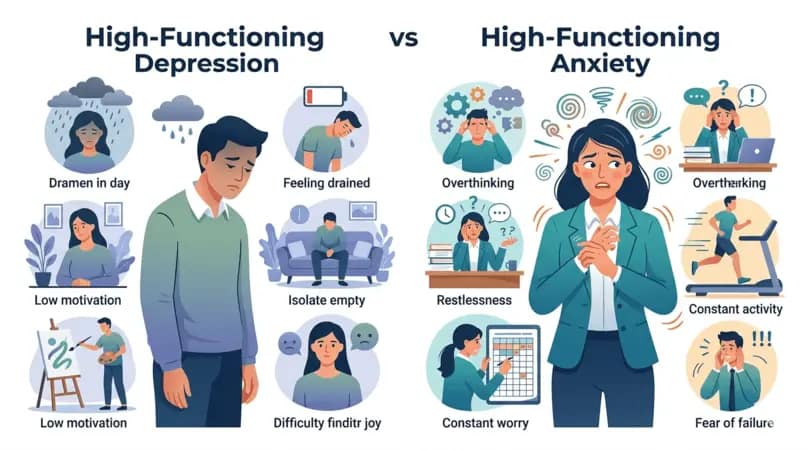
High-Functioning Anxiety vs Depression Chart
| Feature | High-Functioning Anxiety | High-Functioning Depression |
|---|---|---|
| Main Emotion | Excessive worry and fear | Persistent sadness and emptiness |
| Motivation | Driven by fear of failure | Struggles with low motivation |
| Energy Level | Often restless and tense | Often tired and emotionally drained |
| Thought Pattern | Overthinking future problems | Negative feelings |
| Productivity | Works hard to reduce anxiety | Continues working despite emotional exhaustion |
| Self-Talk | “What if something goes wrong?” | “Nothing I do is good enough.” |
| Social Behavior | Appears busy, organized, and active | Appears fine but may feel disconnected |
| Sleep Problems | Difficulty falling asleep due to racing thoughts | Sleeping too much or feeling tired after sleep |
| Reaction to Success | Temporary relief before new worries begin | Little satisfaction or joy from achievements |
| Physical Symptoms | Muscle tension, rapid heartbeat, restlessness | Low energy, fatigue, and lack of interest |
| Core Struggle | Fear and constant worry | Sadness and emotional numbness |
| Hidden Reality | Looks confident but feels anxious | Looks successful but feels empty |
Best takeaway for readers:
High-functioning anxiety is often fueled by fear, while high-functioning depression is often marked by emotional exhaustion. Both can exist behind a successful and productive appearance.
What Does High-Functioning Depression Feel Like?
High-functioning depression often feels like carrying a heavy emotional burden that no one else can see. A person may go to work, take care of family responsibilities, and appear successful, but inside they feel tired, empty, or disconnected. Simple tasks can feel harder than they should, and achievements may bring little happiness. Many people describe it as feeling emotionally numb while still pushing themselves to keep going every day.
What Does High-Functioning Anxiety Feel Like?
High-functioning anxiety often feels like being stuck in a constant state of worry. A person may appear organized, productive, and motivated, but their mind is always racing with thoughts about what could go wrong. They may overthink decisions, fear making mistakes, and feel pressure to meet high expectations. Even when things are going well, it can be difficult for them to relax because they are always preparing for the next problem or challenge.

Can You Have High-Functioning Depression vs Anxiety at the Same Time?
Yes, it is possible to experience both high-functioning anxiety and high-functioning depression at the same time. A person may constantly worry, overthink, and feel pressure to perform well (signs of anxiety) while also feeling emotionally exhausted, unmotivated, or empty inside (signs of depression). Because they continue to work, study, and manage responsibilities, these struggles often go unnoticed by others.
When both conditions occur together, a person may appear successful on the outside but feel overwhelmed internally. They may stay busy to avoid negative thoughts, struggle to relax, experience sleep problems, and find little joy in their achievements. If these symptoms persist and begin affecting daily life, speaking with a licensed mental health professional can help provide support and guidance.
Real-Life Examples of High Functioning Depression and Anxiety
High-functioning depression and anxiety often do not look obvious from the outside. People continue their daily routines, but internally they struggle with stress, sadness, and constant worry. Here are some simple real-life examples to understand it better:
Example 1: The working professional
A person goes to the office every day, meets deadlines, and even gets praise from their boss. But inside, they feel emotionally unhappy, unmotivated, and empty. They constantly think they are not doing enough and worry about making mistakes, even when everything is fine.
Example 2: The student
A student gets good grades and appears focused in class. However, they feel intense pressure to perform perfectly. They overthink every exam, fear failure, and also feel tired, low, and disconnected from friends after studying.
Example 3: The socially active person
Someone regularly attends social events, replies to messages, and seems happy online. But in reality, they feel anxious before meeting people and emotionally exhausted afterward. They often go home and feel sad or empty even after a good day.
These examples show how a person can “function” in daily life while still struggling with hidden emotional pain from both anxiety and depression.
How Are High-Functioning Depression and Anxiety Diagnosed?
High-functioning depression and anxiety are diagnosed by a licensed mental health professional, such as a psychologist or psychiatrist, and through a mental health check-in worksheet. There is no single lab test for these conditions. Instead, the doctor asks about your thoughts, emotions, behavior, sleep, energy levels, and daily functioning. They may also use questionnaires and clinical interviews to understand how long symptoms have been present and how much they affect your life. Even if a person is still working or studying normally, ongoing feelings of sadness, worry, or exhaustion can still indicate a mental health condition that needs attention.
Treatment Options for High-Functioning Depression and Anxiety
- Psychotherapy (Talk Therapy):
Helps you understand thoughts, emotions, and behaviors. Cognitive Behavioral Therapy (CBT) is one of the most effective methods. - Medication (if needed):
Antidepressants or anti-anxiety medicines may be prescribed by a psychiatrist. It helps balance mood and reduce symptoms. - Stress Management Techniques:
Breathing exercises, mindfulness, and relaxation techniques help calm overthinking and reduce anxiety levels. - Healthy Lifestyle Changes:
Regular sleep, balanced diet, and daily physical activity can improve mood and energy levels over time. - Routine and Structure:
Creating a simple daily routine helps reduce overwhelm and improves focus and emotional stability. - Support System:
Talking to trusted friends, family, or support groups can reduce feelings of isolation and provide emotional comfort. - Professional Guidance:
Regular check-ins with a licensed mental health professional help track progress and adjust treatment when needed.
Which Condition Is More Common?
High-functioning anxiety is often reported more frequently because anxiety symptoms can motivate people to stay productive and active. High-functioning depression is less recognized because many people hide their emotional struggles behind work, relationships, and daily responsibilities. Both conditions are common and can affect people of any age or background.
Which Is Harder to Live With: Anxiety or Depression?
Neither condition is universally harder. High-functioning anxiety often involves constant worry and fear, while high-functioning depression is linked to emotional exhaustion and sadness. The impact varies from person to person, and both conditions deserve attention and support.
Frequently Asked Questions
What are the signs of high-functioning depression?
Common signs of high-functioning depression include persistent sadness, emotional exhaustion, low motivation, overthinking, self-criticism, and difficulty enjoying achievements. Many people continue working, studying, and meeting responsibilities while quietly struggling with their mental health.
How to stop high-functioning depression?
Managing high-functioning depression often involves professional support, healthy lifestyle habits, stress management, and strong social connections. Therapy, self-care, regular sleep, and emotional support can help reduce symptoms and improve overall well-being.
What is the difference between high-functioning anxiety and depression?
High-functioning anxiety is driven by worry, fear, and overthinking, while high-functioning depression is associated with persistent sadness, low motivation, and emotional exhaustion. Both can remain hidden behind productivity and success.
Can high-functioning anxiety turn into depression?
Yes. Long-term anxiety can lead to chronic stress and emotional exhaustion, which may increase the risk of developing depressive symptoms over time.
Which is worse: high-functioning anxiety or high-functioning depression?
Neither condition is necessarily worse than the other. Both can significantly affect emotional well-being and daily life. The impact depends on the severity of symptoms, personal circumstances, and whether professional support is received.
Note: High-functioning anxiety and high-functioning depression are commonly used terms, but only a licensed mental health professional can provide a diagnosis.
Conclusion
High-functioning depression and anxiety are often hidden because a person may still appear successful and in control on the outside. However, inside they may be dealing with constant worry, emotional exhaustion, low mood, or overthinking. Understanding these conditions is important because they can affect anyone, regardless of how capable or productive they seem.
The key takeaway is that functioning in daily life does not always mean a person is mentally well. With proper awareness, support, and treatment such as therapy, lifestyle changes, and professional guidance, both high-functioning depression and anxiety can be managed effectively. If these feelings continue, reaching out to a mental health professional is a strong and important step toward recovery and emotional balance.

Sameya Salman is a writer at The Fit & Fresh who researches and writes about mental health and emotional well-being, with a focus on making topics like high-functioning depression easy to understand. She researches each article using trusted mental health sources to help readers recognize symptoms, understand treatment options, and feel less alone.