
Feeling tired while appearing fine? Learn the signs, causes, diagnosis, and treatment of high-functioning bipolar depression to get the support.
Table of Contents
What Is High-Functioning Bipolar Depression?
High-functioning bipolar depression is a term used to describe people with bipolar disorder. They continue to manage work, school, relationships, and daily responsibilities with the experience of depression. They may appear successful and productive on the outside, but struggle with sadness, low energy, hopelessness, and emotional tiredness in private. High-functioning bipolar depression is not an official medical diagnosis in the DSM-5. It is commonly used to describe people whose symptoms are hidden behind their ability to function.
Many people with Bipolar II disorder are more likely to be described as high functioning. In bipolar II disorder, their hypomanic episodes can make them seem energetic and productive, while depressive episodes are easier to hide. In comparison, Bipolar I disorder involves full manic episodes that are usually more noticeable and disruptive. This is why someone with bipolar depression can appear “fine” to others, but is silently dealing with significant emotional challenges and needs proper diagnosis and treatment.
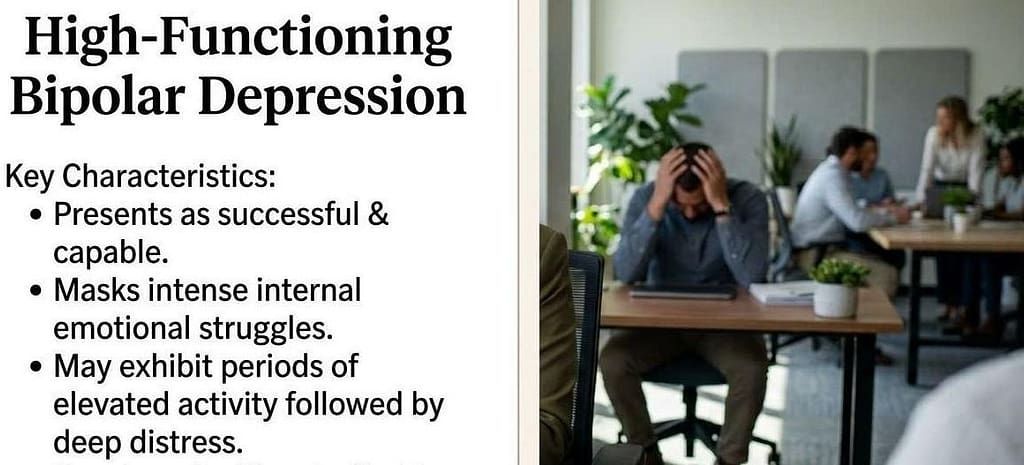
| High-functioning bipolar depression is a term used for people with bipolar disorder who continue working, studying, or managing daily life despite depression. Although it is not an official medical diagnosis, it describes people who hide their symptoms while struggling emotionally. |
Can Bipolar Depression Be High Functioning?
Yes, bipolar depression can be high functioning. Many people, especially those with Bipolar II disorder, continue working, studying, or caring for their families while facing depression. Because hypomania is less severe than full mania. Their symptoms are often harder to recognize.
Many people also hide their sadness, stay busy, or pretend everything is fine. As a result, friends, family, and even healthcare providers don’t recognize the condition and treatment delays.
What Does High-Functioning Bipolar Depression Feel Like?
In high-functioning depression, people smile, meet deadlines, and take care of their responsibilities. They feel emotionally exhausted, constantly tired, or disconnected inside. Even simple tasks can require a great deal of mental effort, which makes daily life feel stressful despite normal life.
Many people also experience guilt and do not feel happy in good moments. They may overwork to hide their difficult emotions or struggles due to fear of judgment. Over time, this emotional masking can lead to loneliness, burnout, and a continuous feeling of emptiness. Professional support is an important step toward recovery.
Why High-Functioning Bipolar Depression Is Often Misdiagnosed
Many people with high-functioning bipolar depression continue daily life actitvities but struggles with depression internally. Because they appear successful and don’t talk about their emotion.Others may assume they are doing well. In some cases, even healthcare professionals may first diagnose major depression if a history of hypomania is not recognized.
A delayed or incorrect diagnosis can prevent people from receiving the most appropriate treatment. Paying attention to recurring mood changes, energy shifts, and depressive episodes helps doctors make a more accurate diagnosis.
Signs and Symptoms of High-Functioning Bipolar Depression
People with high-functioning bipolar depression often appear calm and successful, but their symptoms can affect their emotions, energy, thinking, and daily behavior. These warning signs are often overlooked by others. It is essential to recognize these symptoms and seek the right diagnosis and treatment.
Emotional Symptoms
Emotional symptoms are often the first signs of high-functioning bipolar depression. A person may feel happy in public while struggle with emotional pain privately.
- Persistent sadness or low mood
- Feeling hopeless or empty
- Loss of interest in favorite activities
- Irritability or mood swings
- Guilt or feelings of worthlessness
- Increased anxiety or emotional sensitivity

Physical Symptoms
Depression can also affect the body and mind. Many people feel physically exhausted even after getting enough rest.
- Constant fatigue or low energy
- Sleeping too much or having trouble sleeping
- Changes in appetite or weight
- Frequent headaches or body aches
- Low motivation for daily tasks
- Feeling physically drained throughout the day
Behavioral Symptoms
Many people with high-functioning bipolar depression continue working or caring for others, but they often change their behavior to hide their struggles.
- Overworking to avoid difficult emotions
- Withdrawing from friends or family
- Avoiding hobbies and social activities
- Pretending everything is fine despite feeling worried
- Difficulty maintaining routines
- Reduced productivity during depressive episodes
Cognitive Symptoms
Depression can also affect thinking.It makes everyday decisions and tasks more difficult than usual.
- Trouble concentrating
- Poor memory or forgetfulness
- Negative or self-critical thoughts
- Difficulty making decisions
- Feeling mentally “foggy”
- Trouble planning or staying organized
Comparison Table: Symptoms of High-Functioning Bipolar Depression
| Symptom Category | Common Signs | How It Affects Daily Life |
|---|---|---|
| Emotional | Sadness, hopelessness, guilt, anxiety | It makes difficult to enjoy life and manage emotions. |
| Physical | Fatigue, sleep problems, appetite changes | It reduces energy and makes daily tasks feel exhausting. |
| Behavioral | Overworking, social withdrawal, masking emotions | It hides the condition, often delaying diagnosis and support. |
| Cognitive | Poor concentration, memory issues, negative thinking | Affects work, school, decision-making, and problem-solving. |
Characteristics of Bipolar Depression
The characteristics of bipolar depression go beyond feeling sad. Bipolar depression is part of bipolar disorder, which includes episodes of depression along with periods of mania or hypomania. People with high-functioning bipolar depression continue work and meet responsibilities while silently struggling with emotional pain.
Persistent Sadness
In this condition, a patient feels a low mood that continues for days or weeks and doesn’t improve with everyday activities.
Loss of Interest
A person who faces bipolar disorder, enjoys hobbies, social events, and daily routines do not feel rewarded as were in the past.
Low Energy
Constant tiredness and lack of motivation can make even simple tasks feel overwhelming due to mental worry.
Poor Focus
Difficulty concentrating, remembering information, or making decisions is common.
Sleep Changes
If the routine of sleep changes, it also keep worse impact on mood. For Example, sleeping too much or too little can cause mood changes.
Mood Swings
Depressive episodes change with periods of mania or hypomania. It is the key feature that sets bipolar depression is different from major depression.

High-Functioning Bipolar Disorder vs. High-Functioning Depression
| Feature | High-Functioning Bipolar Disorder | High-Functioning Depression |
|---|---|---|
| Mood Pattern | Replacement between depression, mania, or hypomania | Fluctuates between very high and very low |
| Energy Levels | Usually remains consistently low | Usually remain consistently low |
| Emotional Changes | Extreme mood swings over time | Ongoing sadness or emotional numbness |
| Productivity | May become unusually productive during hypomania, then struggle during depression | Stays productive but often feels emotionally exhausted |
| Sleep | Changes with mood episodes, such as sleeping very little during hypomania and too much during depression | Usually sleeps too much or has trouble sleeping during depressive periods |
| Decision-Making | May become impulsive or take unnecessary risks during hypomania | Often struggles with indecision and low motivation |
| Diagnosis | Diagnosed as Bipolar I or Bipolar II disorder | Often associated with Persistent Depressive Disorder (PDD) or chronic depression |
| Treatment | Usually includes mood stabilizers, therapy, and lifestyle management | Commonly treated with therapy, antidepressants (when appropriate), and healthy lifestyle changes |
| Key Difference | Includes mania or hypomania along with depression | Involves depression without manic episodes |
Causes and Risk Factors
There is no single cause of high-functioning bipolar depression. Instead, it usually develops from a combination of genetic, biological, and environmental factors. Understanding these risk factors can help people recognize the condition early and seek better treatment.
Genetics
A family history of bipolar disorder or other mood disorders can increase the risk of developing bipolar depression.
Brain Chemistry
Changes in brain chemicals that regulate mood, such as dopamine and serotonin, may contribute to depressive and hypomanic episodes.
Trauma
Childhood abuse, neglect, the loss of a loved one, or other traumatic experiences can cause symptoms in people who are already involve in mental health problems.
Chronic Stress
Long-term stress from work, relationships, finances, or major life changes can worsen mood episodes and make symptoms harder to manage.
Sleep Disruption
Irregular sleep patterns can cause both depressive and hypomanic episodes, especially in people with bipolar disorder.
(A sudden change in sleep patterns can trigger mood episodes in people with bipolar disorder. Maintaining a consistent sleep routine may help reduce this risk.
Substance Misuse
Alcohol and recreational drugs may temporarily hide symptoms, but they often make mood swings more severe and interfere with effective treatment.
According to the National Center for Biological Information,the World Health Organization has ranked bipolar disorder as 12th leading cause of disability in whole world and 22 million individuals are affected by this disease.
How High-Functioning Bipolar Depression Affects Daily Life
High-functioning bipolar depression makes everyday responsibilities feel much harder than they appear. A person may complete work assignments, attend social events, or care for family members while privately struggling with exhaustion, low motivation, or emotional pain.
Over time, constantly hiding these feelings can increase stress and affect relationships, work performance, and overall quality of life. Seeking support early can make daily challenges easier to manage.
How Doctors Diagnose High-Functioning Bipolar Depression
There is no single blood test or brain scan that can diagnose high-functioning bipolar depression. Instead, doctors use a detailed mental health evaluation to understand your symptoms, mood patterns, and medical history.
Clinical Interview
A doctor or mental health professional asks about your symptoms, daily functioning, emotions, and mood changes to diagnose the condition.
Mood History
Your doctor will review past episodes of depression, mania, or hypomania to identify recurring mood patterns.
Family History
Because bipolar disorder can run in families. The doctor may be asked whether close relatives have experienced bipolar disorder, depression, or other mental health conditions.
Medical Tests
Blood tests or other medical exams may be performed to rule out physical conditions, such as thyroid disorders or vitamin deficiencies, that can cause similar symptoms.
Treatment Options
Treatment for high-functioning bipolar depression usually combines medication, therapy, healthy lifestyle habits, and continuous support. The right treatment plan varies for each person and should always be guided by a qualified mental health professional.

Medication
Doctors may prescribe mood stabilizers, antipsychotics, or other medications to manage mood episodes. Medications should only be taken as prescribed and should never be started or stopped without medical advice.
Therapy
Psychotherapies such as Cognitive Behavioral Therapy (CBT), Interpersonal and Social Rhythm Therapy (IPSRT), and psychoeducation can help people understand their condition, manage stress, improve coping skills, and recognize early warning signs of mood changes.
Lifestyle Changes
Healthy daily habits can support treatment. Regular sleep schedule,exercise, balanced diet, stress management, and less consumption of alcohol may help reduce mood episodes and improve overall well-being.
Support Groups
Support groups provide a safe space to share experiences, learn from others living with bipolar disorder, and receive emotional encouragement. They can reduce feelings of isolation and help people stay motivated throughout recovery.
Research suggests that early intervention can help reduce the severity of the condition. A person can seek help at the first signs or symptoms of bipolar disorder.
According to research , early recognising disease helps to get better treatment and person get medication at signs of bipolar disorder.
Common Myths About High-Functioning Bipolar Depression
Many misunderstandings about bipolar disorder can prevent people from seeking help. Knowing the facts can reduce stigma and encourage earlier treatment.
| Myth | Fact |
|---|---|
| If you can work, you can’t be depressed. | Many people continue working while silently struggling with depression. |
| Bipolar disorder always involves extreme mood swings. | Some people experience milder hypomania that is difficult to recognize. |
| Strong people should handle it alone. | Bipolar disorder is a medical condition that often requires professional treatment. |
| Medication is the only treatment. | Treatment often includes therapy, healthy habits, medication, and ongoing support. |
Conclusion
High-functioning bipolar depression can be difficult to recognize because many people continue to work, study, and care for others while quietly struggle with depressive symptoms. If someone looks physically happy, it does not mean someone is also emotionally well. Understanding the signs, causes, and differences between bipolar depression and high-functioning depression can lead to earlier diagnosis and more effective treatment.
Seeking help from a qualified mental health professional is an important first step toward recovery. With the right combination of treatment, healthy habits, and support, people with bipolar disorder can manage their symptoms and live fulfilling, meaningful lives.
Frequently Asked Questions
How long does bipolar depression last?
A bipolar depressive episode usually lasts at least two weeks, but it can continue for several weeks or even months without treatment. The length varies from person to person and depends on the type of bipolar disorder, treatment, and overall health. Early diagnosis and proper care can help shorten episodes.
How to beat bipolar depression?
You cannot simply “beat” bipolar depression on your own, but it can be effectively managed with the right treatment. A combination of medication, therapy, healthy sleep habits, regular exercise, stress management, and ongoing support can reduce symptoms and help prevent future mood episodes.
How difficult is it to live with bipolar disorder?
Living with bipolar disorder can be challenging because it affects mood, energy, relationships, and daily responsibilities. However, many people lead successful and fulfilling lives with the right treatment, healthy lifestyle habits, and support from healthcare professionals, family, and friends.
What does a depressive episode look like in bipolar disorder?
A bipolar depressive episode often includes persistent sadness, loss of interest in daily activities, low energy, trouble concentrating, changes in sleep or appetite, and feelings of hopelessness or guilt. In high-functioning bipolar depression, a person may continue working or studying while silently struggling with these symptoms.
(The information in this article is for educational and informational purposes only and should not be considered medical advice, diagnosis, or treatment.)

Sameya Salman is a writer at The Fit & Fresh who researches and writes about mental health and emotional wellbeing, with a focus on making topics like high-functioning depression easy to understand. She researches each article using trusted mental health sources to help readers recognize symptoms, understand treatment options, and feel less alone.