
Do you look calm, successful, and in control while your mind is constantly filled with worry? Learn the signs, causes, and practical ways to manage high-functioning anxiety.
Introduction
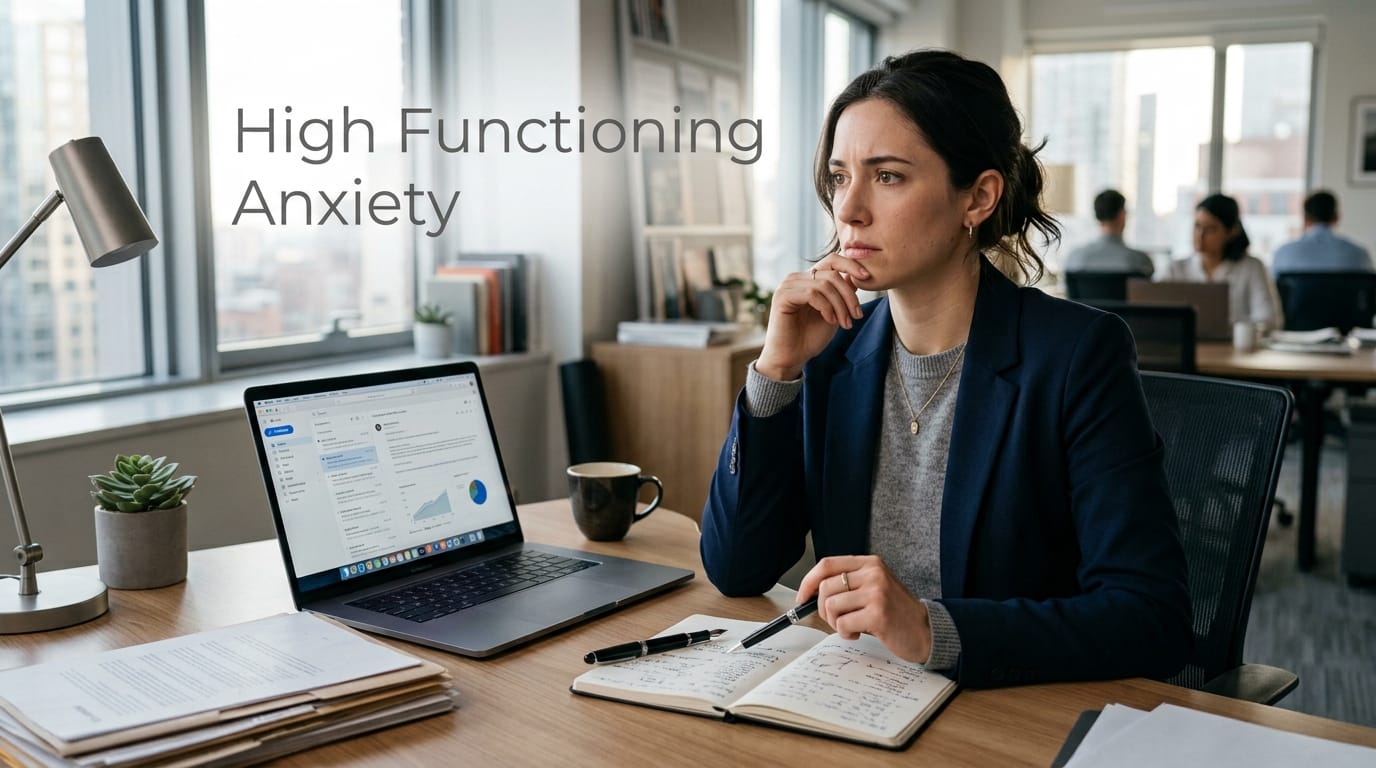
You may look successful, organized, and calm on the outside while feeling worried, tense, or overwhelmed inside. You may meet deadlines, care for your family, and keep up with daily responsibilities, yet still feel like your mind never switches off.
High-functioning anxiety is a term commonly used to describe anxiety that exists alongside the ability to maintain work, social, or daily responsibilities. A person may appear fine while experiencing significant worry or stress internally.
It is important to understand that this is not a formal diagnosis. Mental health professionals may assess symptoms for conditions such as generalized anxiety disorder or other anxiety disorders.
In this guide, you’ll learn about the definition, signs, causes, and treatment of high-functioning anxiety in detail.
What Is High-Functioning Anxiety?
High-functioning anxiety describes a pattern in which someone experiences anxiety but continues to perform well in everyday life.
For example, someone might:
- Constantly worry about making mistakes, but still perform well at work.
- Feel nervous before social events but continue attending them.
- Feel trouble even after completing important tasks.
- Set very high standards and feel guilty when they fall short.
- Appear confident while privately experiencing self-doubt.
Anxiety can affect sleep, concentration, relationships, physical health, and overall quality of life, even when someone continues meeting their responsibilities.
7 Signs of High-Functioning Anxiety
The 7 signs of high-functioning anxiety can look different from person to person.
Overthinking
You may spend a lot of time thinking about possible problems or outcomes. Even small decisions can become stressful because you worry about choosing incorrectly.
Extremely High Standards
Perfectionism is often connected with anxiety. You may feel that your work must be flawless or that you should always do more. Finishing a task may bring only temporary relief before you start worrying about the next one.
Find It Difficult to Relax
When things become quiet, your thoughts may become louder. You might feel uncomfortable taking breaks because you believe you should always be productive.
Seek Reassurance
You may repeatedly ask others if everything is okay or whether you made the right decision. Reassurance can provide short-term relief, but the worry may return later.
Having Trouble Saying No
You may accept extra responsibilities because you worry about disappointing people. Over time, this can leave you with too many commitments and little time to rest.
Hide Anxiety Behind Productivity
Keeping busy can become a way to avoid uncomfortable thoughts and feelings. Other people may see you as highly motivated while you feel exhausted underneath.
Feel Anxious Even When Things Are Going Well
Anxiety does not always disappear when a problem is solved. You may finish an important project and immediately start worrying about what could go wrong next.
If you want to know about signs of high-functioning depression, click here
What Causes Excessive Anxiety?
If you wonder what causes excessive anxiety, there is usually no single explanation.
A number of biological, psychological, environmental,and lifestyle factors can contribute to the development of anxiety.
Perfectionism and Thinking Patterns
People who place intense pressure on themselves may become more vulnerable to ongoing worry.
Thinking patterns such as expecting the worst, overestimating risks, or believing that mistakes are unacceptable can keep anxiety going.
Stressful Experiences and Life Changes
Major changes or difficult experiences can increase anxiety.
These may include:
- Work or academic pressure
- Financial concerns
- Relationship difficulties
- Family responsibilities
- Major life transitions
- Ongoing stress
Biological and Family Factors
Genetics and brain chemistry may influence a person’s vulnerability to anxiety. Having a family history of anxiety does not mean someone will definitely develop it, but it may be one contributing factor.
Lifestyle Factors
Poor sleep, chronic stress, lack of physical activity, and excessive caffeine may make anxiety symptoms harder to manage for some people.
Lifestyle factors are not necessarily the original cause of anxiety, but they can sometimes make symptoms more noticeable.
How High-Functioning Anxiety Affects Daily Life
High-functioning anxiety can affect many areas of life, even when someone continues to appear successful.
At Work or School
An anxious person may become extremely focused on deadlines and performance.
They might check their work repeatedly, struggle to delegate, or work longer hours because they fear making mistakes.
Over time, this constant pressure can contribute to exhaustion.

In Relationships
Anxiety may cause someone to overanalyze conversations or worry about what others think.
They may frequently seek reassurance or avoid difficult conversations because they fear conflict.
Physical and Emotional Effects
Long-term anxiety can be associated with symptoms such as:
- Muscle tension
- Restlessness
- Difficulty sleeping
- Fast heartbeat
- Stomach discomfort
- Irritability
- Difficulty concentrating
- Feeling constantly “on edge”
Not everyone experiences the same symptoms.
High-Functioning Anxiety and Functional Burnout
Constantly pushing yourself can eventually become exhausting.
Functional burnout can occur when a person continues meeting responsibilities while feeling increasingly drained, detached, or unable to recover from stress.
The key issue is that outward performance can hide the level of internal strain.
High-Functioning Anxiety and Depression
High-functioning anxiety and depression can occur together.
Someone may continue working, socializing, and completing responsibilities while also experiencing low mood, loss of interest, hopelessness, or emotional exhaustion.
Anxiety and depression can also influence each other. Constant worry may become exhausting, while depression can make everyday challenges feel harder to manage.
Because people experience these conditions differently, it is important not to self-diagnose based on a few symptoms.
If persistent anxiety or low mood is affecting daily life, a qualified mental health professional can help determine what may be happening.
High-Functioning Anxiety vs. Low-Functioning Anxiety
The terms “high-functioning anxiety” and “low-functioning anxiety” are commonly used online, but neither is a formal clinical diagnosis.
The main difference is how symptoms appear to affect everyday functioning.
With what people call high-functioning anxiety, a person may continue to work, study, maintain relationships, and complete responsibilities despite significant internal worry.
With what is sometimes called low-functioning anxiety, anxiety symptoms may interfere more visibly with work, school, relationships, self-care, or other daily activities.
However, functioning does not determine how severe someone’s distress is.
A person who appears highly productive may still be struggling significantly.
Normal Anxiety vs. High-Functioning Anxiety
Anxiety is a normal human response to stress or danger.
For example, feeling nervous before an interview or important presentation is common. This type of anxiety often decreases when the situation is over.
Anxiety may become a concern when worry is:
- Persistent or difficult to control
- Disproportionate to the situation
- Interfering with sleep or concentration
- Affecting relationships
- Causing significant physical symptoms
- Making everyday activities harder
The important question is not simply whether you feel anxious. It is how often the anxiety occurs, how intense it is, and how much it affects your life.
How Is High-Functioning Anxiety Treated?
High-functioning anxiety treatment depends on the symptoms, their severity, and the underlying cause.
Because high-functioning anxiety is not a formal diagnosis, treatment usually focuses on the specific anxiety disorder or symptoms a person is experiencing.
Therapy and Counseling
Psychotherapy can help people understand anxious thought patterns and develop healthier ways to respond to worry.
Cognitive behavioral therapy, for example, can help identify unhelpful thoughts and replace them with more balanced ways of thinking.
Medication
In some cases, a healthcare professional may recommend medication for an anxiety disorder.
Medication decisions should be made with a qualified healthcare professional based on the person’s symptoms, medical history, and individual needs.
Lifestyle and Self-Management
Healthy habits can support mental well-being.
These may include:
- Maintaining a regular sleep schedule
- Getting regular physical activity
- Limiting excessive caffeine
- Eating regular, balanced meals
- Making time for enjoyable activities
- Practicing relaxation techniques
Lifestyle changes may be helpful, but they should not replace professional care when anxiety is severe or persistent.
Practical Ways to Cope With High-Functioning Anxiety
Small changes can help reduce the pressure that often comes with constant worry.
Challenge Perfectionistic Thoughts
Ask yourself whether a task truly needs to be perfect.
Try replacing “I must get everything right” with “I can do my best without being perfect.”
Set Realistic Expectations
Make a manageable list of priorities rather than trying to complete everything at once.
Give yourself permission to have limits.
Practice Saying No
Saying no does not make you selfish or unreliable.
Start with small situations and practice protecting your time and energy.
Schedule Time to Rest
Rest is not something you have to earn after completing every task.
Schedule breaks just as you would schedule other responsibilities.

Identify Anxiety Triggers
Notice when anxiety becomes stronger.
You might keep a simple journal and record the situation, your thoughts, physical symptoms, and how you responded.
Reduce Constant Reassurance-Seeking
If you regularly ask others to confirm that everything is okay, pause before seeking reassurance.
Ask yourself what evidence you already have about the situation.
Talk to Someone You Trust
Sharing your experience with a trusted friend, family member, therapist, or other qualified professional can make anxiety feel less isolating.
When Should You Seek Professional Help?
You do not have to wait until anxiety stops you from functioning before seeking help.
Consider talking with a mental health professional if anxiety:
- Feels difficult to control
- Interferes with sleep
- Affects work or relationships
- Causes ongoing physical symptoms
- Leads to avoidance
- Makes it difficult to enjoy life
- Causes significant emotional distress
A therapist, psychologist, psychiatrist, or other qualified healthcare professional can help assess your symptoms and recommend appropriate support.
If you are experiencing thoughts of harming yourself or feel unable to stay safe, seek urgent help from local emergency services or a crisis service in your area.
Frequently Asked Questions
What are the signs of high-functioning anxiety?
Common signs of high-functioning anxiety include constant overthinking, perfectionism, difficulty relaxing, excessive worrying, trouble saying no, reassurance-seeking, and feeling anxious even when things are going well. A person may appear productive and successful while privately feeling tense, overwhelmed, or mentally exhausted.
How do you treat high-functioning anxiety?
High-functioning anxiety is not a formal diagnosis, so treatment depends on the underlying anxiety symptoms or disorder. Therapy, especially cognitive behavioral therapy (CBT), healthy lifestyle habits, stress management, and, when appropriate, medication can help manage anxiety. A mental health professional can recommend the most suitable approach.
What is the 3-3-3 rule of anxiety?
The 3-3-3 rule is a quick anxiety-grounding technique: look around and name 3 things you see, listen for 3 sounds you hear, then move 3 parts of your body. This simple exercise shifts your focus away from anxious thoughts and brings you back to the present moment.
How do you know you have high anxiety?
You may be experiencing high anxiety if you frequently have persistent worry, racing thoughts, restlessness, muscle tension, difficulty sleeping, trouble concentrating, or a feeling that something bad may happen. If these symptoms are difficult to control or interfere with your daily life, relationships, sleep, or work, consider speaking with a qualified mental health professional.
Conclusion
To conclude, high-functioning anxiety is a commonly used term for anxiety that can exist behind a successful or productive outward appearance.
Someone may meet deadlines, care for others, and appear confident while privately dealing with worry, perfectionism, physical tension, or emotional exhaustion.
Understanding the 7 signs of high-functioning anxiety can be a useful first step. It is also important to remember that being able to function does not mean you have to manage anxiety alone.
If anxiety is persistent or affecting your quality of life, consider speaking with a qualified mental health professional. Getting support is not a sign of weakness. It can be a practical step toward feeling calmer, healthier, and more in control.

Sameya Salman is a writer at The Fit & Fresh who researches and writes about mental health and emotional well-being, with a focus on making topics like high-functioning depression easy to understand. She researches each article using trusted mental health sources to help readers recognize symptoms, understand treatment options, and feel less alone.