Why am I always on edge? Find out how stress, anxiety, sleep, and other factors may affect you, and get practical tips to feel calm.
“This article isn’t about sudden panic or an anxiety spike — it’s about that steady, low-grade tension that never fully goes away.”
| When you feel on edge all the time, your body and mind feel the effects of stress, anxiety, or bad sleep. If the feeling is continuous or interferes with daily life, speaking with a healthcare professional can help identify the cause. |

What Does It Mean to Feel “On Edge”?
What does “feeling on edge” mean? It usually means feeling tense, nervous, restless, or unable to relax. You may feel like something bad could happen, even when there is no clear danger.
Being on edge can affect both your body and your thoughts. You might notice:
- Constant tension in your muscles
- Racing or unwanted thoughts
- Restlessness
- Irritability
- Trouble concentrating
- Feeling easily startled
- Difficulty relaxing or sleeping
The meaning of feeling constantly on edge can vary from person to person. Sometimes it is linked to a stressful situation. Other times, it may be related to anxiety or another physical or mental health concern.
| Quick Answer Common causes: Stress, anxiety, poor sleep, caffeine, life changes, and some health conditions. Common symptoms: Muscle tension, restlessness, irritability, racing thoughts, and difficulty sleeping. What can help: Better sleep, reducing triggers, regular movement, breathing exercises, and professional support when needed. |
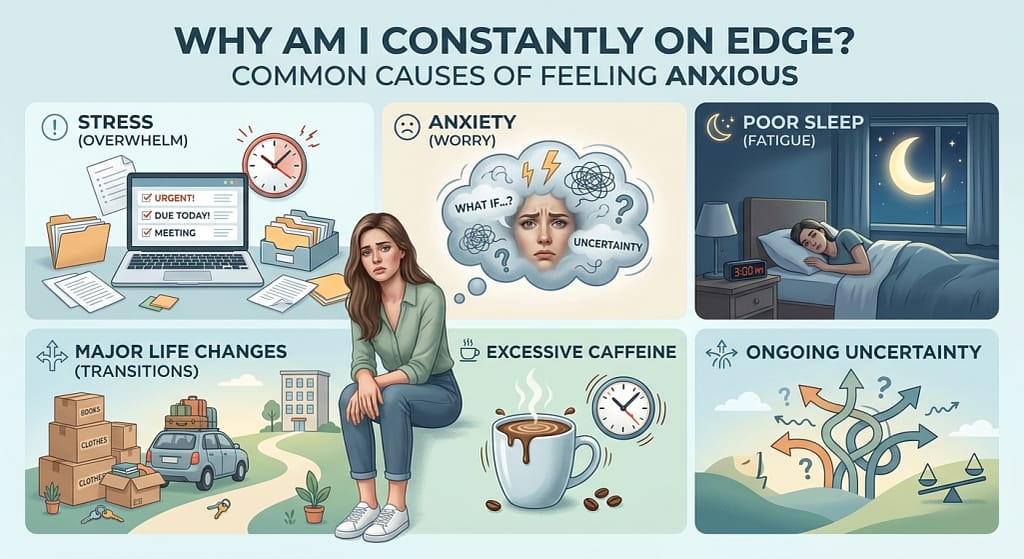
Why Am I Always on Edge? Common Causes
There is no single reason why someone may always feel on edge. If you are asking why I am always on edge, consider what has been happening in your life and whether the feeling is affecting your daily routine.
Stress and daily pressure
Work, school, money problems, relationship difficulties, and family responsibilities can keep your body in a state of tension.
When stress continues for a long time, it can become harder to switch off and relax.
Anxiety and excessive worry
Anxiety is a common reason for feeling constantly on edge. Your mind may keep looking for possible problems or dangers.
You may worry about the future, replay past events, or expect something to go wrong.
Poor sleep and exhaustion
If you are not getting enough quality sleep, it can make you more irritable and less able to deal with stress. Poor sleep and stress can also create a cycle where each makes the other harder to manage.
Physical or mental health conditions
Persistent irritability, tension, or restlessness can sometimes occur with health conditions. If the feeling is new, severe, persistent, or difficult to explain, consider discussing it with a doctor.
NHS explains that anxiety symptoms can become worse during stressful periods and can include irritability, restlessness, sleep difficulties, fatigue, and tension.
Signs and Symptoms of Being Constantly on Edge
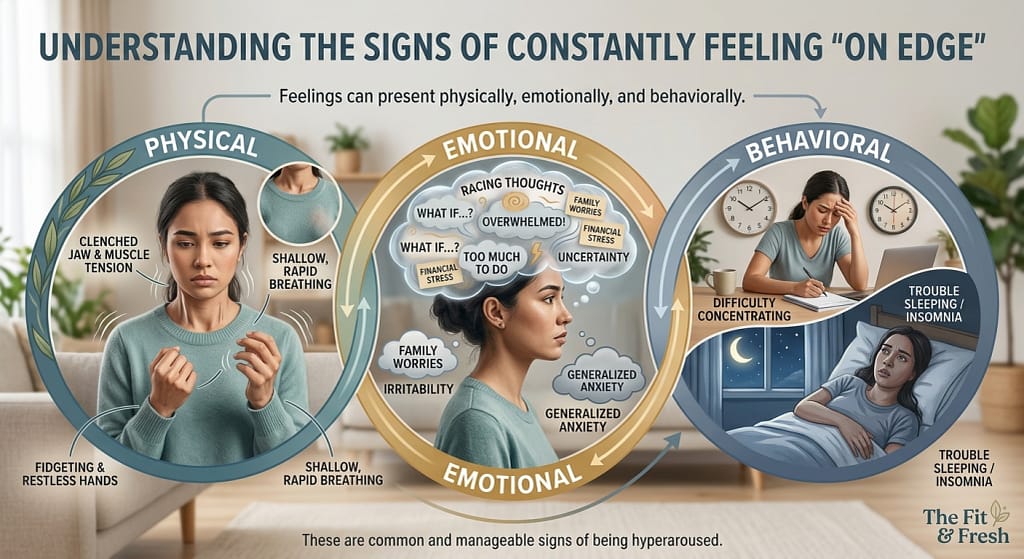
Being on edge can show up in different ways. Some people mainly notice physical symptoms, while others notice changes in their thoughts, emotions, or behavior.
Physical signs
You may experience:
- Muscle tension
- A fast or pounding heartbeat
- Sweating
- Shaking
- Headaches
- Stomach discomfort
- Restlessness
- Difficulty sleeping
Emotional and mental signs
You may feel:
- Nervous or worried
- Irritable
- Overwhelmed
- Unable to relax
- Easily frustrated
- Unable to concentrate
- Constantly alert for problems
Behavioral changes
Feeling constantly on edge may also change what you do. You might avoid certain situations, check things repeatedly, or withdraw from other people.
For example, someone who constantly worries about making mistakes at work may repeatedly check their work long after it is finished.
According to the NHS, anxiety symptoms can affect the mind, body, and behavior, including restlessness, irritability, difficulty concentrating, sleep problems, headaches, muscle pain, sweating, and changes in heartbeat.
Can Anxiety Make You Feel Angry or Irritable?
Anxiety does not always look like fear or obvious worry. For some people, it appears as frustration, impatience, or anger.
When your body stays tense and your mind is overloaded with worry, small problems may feel much harder to handle. Lack of sleep can make this even worse.
Anxiety-related irritability may look like:
- Getting annoyed over small things
- Having a short temper
- Feeling frustrated without knowing why
- Becoming impatient with others
- Feeling overwhelmed by normal demands
However, anger does not automatically mean you have anxiety. Stress, sleep problems, medication effects, depression, and other factors can also contribute to irritability.
Is Always Feeling on Edge a Sign of Anxiety?
It can be, but not always. Anxiety often involves worry, fear, tension, or a sense that something is wrong. Feeling on edge can be one part of that experience.
However, occasional nervousness is a normal response to stress. The bigger question is how often it happens and how much it affects your life.
You may want to consider professional help if you:
- Feel tense or worried most days
- Have trouble sleeping because of worry
- Avoid normal activities
- Find it difficult to concentrate
- Feel increasingly irritable
- Struggle to manage your usual responsibilities
- Feel unable to calm yourself despite trying
A healthcare professional can look at your symptoms and help determine what may be contributing to them.

What Can You Do When You Feel Constantly on Edge?
If you are asking why I am always on edge, it can help to look at both your daily habits and your stress triggers.
Try these simple steps:
Slow down your breathing
Take slow, comfortable breaths. Focus on making your breathing steady rather than forcing very deep breaths.
Identify your triggers
Notice when you feel most on edge. Is it after poor sleep? During work? After drinking caffeine? During conflict? Finding patterns can help you understand what is making you tense.
Improve your sleep routine
Aim for a regular sleep schedule. Reduce stimulating activities close to bedtime and give yourself time to wind down.
Watch your caffeine intake
If caffeine seems to increase your restlessness, try reducing it and see whether your symptoms change.
NIMH notes that healthy habits such as getting enough sleep and reducing caffeine can help reduce anxiety symptoms, alongside approaches such as exercise, mindfulness, psychotherapy, and medication when appropriate.
Move your body
Walking, stretching, exercise, or another activity can be a useful way to release physical tension and support overall well-being.
Take regular breaks
If your day is filled with work, screens, or responsibilities, short breaks can give your mind time to reset.
Talk to someone
Speaking with a trusted friend, family member, counselor, or therapist can make ongoing stress easier to manage.
How Is Constant Anxiety and Feeling on Edge Treated?
Treatment depends on the cause and the person’s symptoms. There is no single treatment that works for everyone.
Lifestyle and stress-management strategies
Healthy sleep habits, regular physical activity, relaxation techniques, social support, and reducing personal triggers may also be useful.
For some people, a combination of professional treatment and lifestyle changes provides the most helpful approach.
Treatment for this kind of ongoing tension often includes therapy, and sometimes medication when appropriate — we cover these options in more detail in our guide on anxiety through the roof. If your symptoms feel more like sudden, intense spikes rather than constant low-level tension, that article may be more relevant to what you’re experiencing.
When Should You Talk to a Doctor or Mental Health Professional?
Feeling on edge occasionally is not usually a reason for concern. But persistent symptoms deserve attention, especially when they interfere with your life.
Consider speaking with a doctor or mental health professional if:
- You feel on edge most of the time.
- Your symptoms are getting worse.
- Anxiety affects your sleep or concentration.
- You avoid activities because of fear or worry.
- Irritability is affecting your relationships.
- You cannot manage the symptoms on your own.
- You have new or unexplained physical symptoms.
If you have severe symptoms, feel unsafe, or think you may harm yourself or someone else, seek urgent professional help or contact local emergency services.
A Real-Life Example of Feeling On Edge
Imagine Sara, a 28-year-old office worker. Every evening after work, she feels tense without knowing why. Her shoulders are tight, her mind keeps replaying small conversations from the day, and she can’t fully relax even while watching TV.
At night, she lies in bed thinking about tomorrow’s tasks, even the small ones. In the morning, she wakes up already feeling behind, even before her day has started. A late reply from a friend makes her assume something is wrong. A slightly quiet meeting at work makes her wonder if she did something wrong.
Nothing dramatic is happening in her life. But her body stays in a constant state of “waiting for something to go wrong.” This is a common example of what it feels like to be on edge — not one big crisis, but a steady, low-level tension that builds up over time.
If this sounds familiar, you’re not alone. Many people experience this same pattern without realizing it has a name.
Frequently Asked Questions
What does it mean if you’re constantly on edge?
Being constantly on edge means feeling tense, nervous, restless, or easily irritated, often as if you need to stay alert. It can be caused by ongoing stress, anxiety, poor sleep, or other physical or mental health factors.
What is the #1 worst habit for anxiety?
One of the most unhelpful habits for anxiety is avoidance. Avoiding situations that trigger anxiety can reinforce fear over time and make those situations feel even harder to face.
How to stop feeling on edge all of the time?
To stop feeling on edge, identify your triggers, practice slow breathing, get enough sleep, limit excess caffeine, stay physically active, and take regular breaks. If the feeling persists or affects daily life, consider talking with a mental health professional.
How do I stop being on edge?
You can reduce feeling on edge by calming your breathing, relaxing tense muscles, getting adequate sleep, reducing caffeine, and addressing sources of ongoing stress. If you feel constantly on edge despite these steps, professional support can help identify the underlying cause.
Final Thoughts: Understanding Why You Feel on Edge
There can be several possible reasons for being on edge. Stress and anxiety are common, but sleep problems, substances, medications, life changes, and other health concerns can also play a role.
Pay attention to your symptoms and notice when they appear. Small changes may help, but you do not have to manage persistent distress alone. If feeling constantly on edge is affecting your daily life, talking with a qualified healthcare professional can help you understand the cause and find appropriate support.
(This article is for informational purposes only and is not a substitute for professional medical advice.)

Sameya Salman is a writer at The Fit & Fresh who researches and writes about mental health and emotional wellbeing, with a focus on making topics like high-functioning depression easy to understand. She researches each article using trusted mental health sources to help readers recognize symptoms, understand treatment options, and feel less alone.