Heart racing, mind spiraling? If your anxiety is through the roof, this simple 10-minute plan can help you calm down right now and guide you on when to get help.
Last updated: September 21, 2026
Table of Contents
Introduction
‘Anxiety’ through the roof means your anxiety feels far stronger than usual. It is a phrase people use, not a diagnosis. Stress, poor sleep, and too much caffeine are common causes, and the steps below can help bring it down. If you have chest pain, trouble breathing, or feel faint, get medical help now.
What Does “Anxiety Through the Roof” Mean?
“Anxiety through the roof” is an informal way to describe very intense anxiety. It is not a medical diagnosis.
Someone might say:
- “My anxiety is through the roof today.”
- “My anxiety is through the roof before this meeting.”
- “Anxiety is through the roof, and I cannot concentrate.”
- “Everything feels overwhelming right now.”
The phrase usually means that worry or fear feels much stronger than usual.
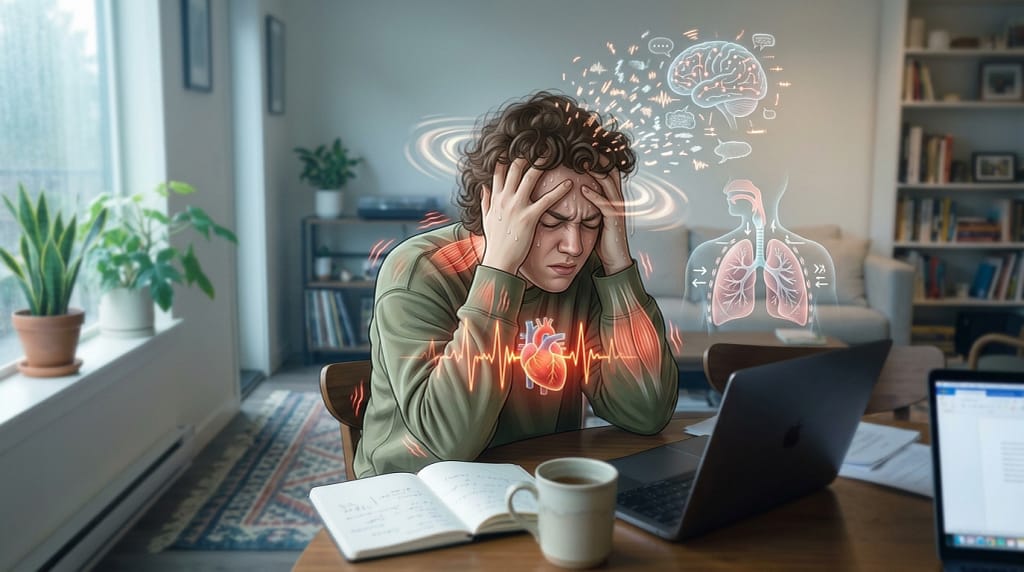
Anxiety can involve both mental and physical reactions. You may feel tense, restless, overwhelmed, or constantly on alert. Physical symptoms can include a fast heartbeat, sweating, shaking, dizziness, stomach problems, and rapid breathing.
If these symptoms happen frequently or begin interfering with work, relationships, sleep, or other parts of life, talk with a healthcare professional.
Why Is My Anxiety Through the Roof?
Most spikes have a cause you can find. Think back over the last 24 hours. Did you sleep badly, drink two coffees, get bad news, or skip a meal? Sometimes there is no clear reason, and that is common too.
Stress can build gradually from several areas of life. Common contributors include:
- Work or school pressure
- Financial concerns
- Relationship difficulties
- Major life changes
- Poor sleep
- Ongoing health worries
- Difficult past experiences
- Excessive use of alcohol or drugs
- Other mental or physical health conditions
According to the NHS, anxiety can be connected with situations involving work, family, finances, health, and difficult past experiences.
Certain medical conditions and medications can also produce symptoms that resemble anxiety. If your symptoms are new, severe, or unusual for you, a healthcare professional can help determine whether another condition could be involved.
Anxiety Symptoms to Look Out For
Anxiety symptoms can affect your body, thoughts, emotions, and behavior.
Physical Anxiety Symptoms
Common physical symptoms may include:
- Racing or noticeable heartbeat
- Rapid breathing
- Sweating
- Shaking or trembling
- Muscle tension
- Dizziness or lightheadedness
- Headaches
- Stomach discomfort
- Nausea
- Feeling weak or tired
- Difficulty sleeping
Mental and Emotional Symptoms
You may also experience:
- Racing thoughts
- Excessive worry
- Restlessness
- Irritability
- Difficulty concentrating
- Feeling constantly “on edge”
- Fear that something bad will happen
- Difficulty controlling your worries
Anxiety can also make you pay unusually close attention to physical sensations or possible threats.
What to Do When Anxiety Is Through the Roof?
You don’t need to fix your anxiety right now. You just need to bring it down a notch. Set a timer for 10 minutes and follow these steps.
Minutes 0 to 2: Slow your breathing
Sit or stand somewhere comfortable. Breathe in through your nose for 4 seconds. Breathe out slowly through your mouth for 6 seconds. Repeat this for 2 minutes. A longer breath out tells your body it is safe to slow down. If deep breaths make you dizzy, just breathe slowly and gently.
Minutes 2 to 5: Come back to the room
Look around and name:
- 5 things you can see
- 4 things you can feel (your feet on the floor, your shirt on your skin)
- 3 things you can hear
- 2 things you can smell
- 1 thing you can taste
This pulls your attention away from racing thoughts and back to what is real right now.
Minutes 5 to 8: Move and reset
Stand up. Drink a glass of water. Walk around the room, or step outside if you can. Drop your shoulders, unclench your jaw, and shake out your hands. Anxiety builds tension in your body, and moving helps release it.
Minutes 8 to 10: Write one line
Grab a pen or your phone and finish this sentence: “Right now, I am worried about…” Then write one small thing you can do next, like “reply to that email tomorrow. “You are not solving everything. You are just getting the worry out of your head.
Still feeling it after 10 minutes?
That is okay. Repeat the plan once, or call a friend and say, “I’m having a hard time right now.” If anxiety spikes keep coming back, talk to a doctor or therapist.
7 Ways to Manage Anxiety When It Keeps Coming Back
If anxiety repeatedly feels overwhelming, daily habits can support better long-term management.
Get Consistent Sleep
It is hard to deal with stress when you don’t get enough sleep. So, aim for a consistent sleep and wake schedule.
Limit Excessive Caffeine
Large amounts of caffeine can make some people feel more anxious. If you notice a connection, consider reducing your intake.

Exercise Regularly
Walking, swimming, cycling, yoga, or another activity you enjoy can support overall well-being. Regular physical activity is also recommended as one way to help manage anxiety.
Practice Mindfulness
Mindfulness involves paying attention to the present moment without immediately judging your thoughts.
You can practice through meditation, breathing exercises, or simply noticing what you are doing right now.
Write Down Your Worries
If your thoughts keep circling, write them down.
Separate:
What I can control:
“I can send the email tomorrow.”
What I cannot control:
“I cannot control how someone responds.”
This can make worries feel more manageable.
Identify Your Triggers
Keep a simple record of when anxiety becomes intense.
Notice patterns involving:
- Sleep
- Caffeine
- Work
- Relationships
- Social situations
- Certain thoughts
- Specific places or activities
Stay Connected With Supportive People
Isolation can increase your anxiety. Maintaining supportive relationships can give you emotional and practical support.
If anxiety keeps coming in waves, tracking when those waves occur may also help you identify patterns.
Why Does Anxiety Come in Waves?
Anxiety does not always remain at the same intensity.
You might feel relatively calm in the morning and extremely anxious later. The intensity can rise and fall depending on stress, thoughts, physical sensations, situations, and other factors.

A wave of anxiety may involve:
- A stressful thought or situation
- A physical stress response
- Increased attention to those sensations
- More worry about what the sensations mean
- An increase in anxiety
This can create a cycle that feels difficult to stop.
When an anxiety wave starts, use the 10-minute plan above.
Can Anxiety Cause a Feeling of Floating?
Some people experiencing intense anxiety describe a feeling of floating, lightheadedness, dizziness, or feeling disconnected from their surroundings.
Anxiety can produce physical symptoms such as lightheadedness and dizziness. However, it is important not to assume that every floating sensation is caused by anxiety.
If the sensation is new, persistent, severe, or accompanied by other concerning symptoms, speak with a healthcare professional.
How Is Severe Anxiety Treated?
Treatment depends on the type and severity of anxiety and the individual’s needs.
Cognitive Behavioral Therapy
Cognitive behavioral therapy (CBT) is a well-researched form of psychotherapy commonly used for anxiety disorders.
CBT can help you recognize unhelpful thought patterns and learn different ways to respond to anxious thoughts and situations.
Other Forms of Therapy
Other approaches may also be appropriate depending on the person and type of anxiety.
For certain fears and phobias, exposure-based therapy can help a person gradually face feared situations in a structured and supportive way. National Institute of Mental Health
Medication for Anxiety
Medication may be recommended for some people. Options vary depending on the specific anxiety condition and individual medical situation.
A healthcare professional can explain potential benefits, risks, side effects, and alternatives.
Do not start, stop, or change psychiatric medication without professional guidance.
When Should You Get Professional Help for Anxiety?
Consider speaking with a healthcare professional if:
- Anxiety is difficult to control.
- It keeps returning.
- It interferes with work or school.
- It disrupts your sleep.
- You avoid important activities.
- It affects relationships.
- Your usual coping strategies are no longer helping.
- Symptoms are becoming more intense.
Mayo Clinic recommends seeking professional help when anxiety interferes with daily life or becomes difficult to control.
It is also important to remember that some physical symptoms associated with anxiety can have other causes. A healthcare professional can help evaluate persistent or unusual symptoms.
If you have thoughts of suicide or are in immediate danger, call or text 988 (US) or your local emergency number.
Frequently Asked Questions About Anxiety Through the Roof
Why has my anxiety gone through the roof?
Usually it is a mix of stress, poor sleep, too much caffeine, big changes, or health worries. Sometimes there is no clear reason. Look back over the last 24 hours for clues. If it keeps happening, talk to a doctor.
What is the #1 worst habit for anxiety?
There is no single worst habit, but avoidance is a big one. Skipping what scares you feels better at first, but it teaches your brain the fear is real. Poor sleep, lots of caffeine, and constantly checking your body for symptoms can also feed anxiety.
What does the phrase “anxiety is through the roof” mean?
It means your anxiety feels much stronger than usual. It is a common phrase, not a medical term.
What to do when anxiety is through the roof?
Slow your breathing (in for 4 seconds, out for 6), name 5 things you can see, then stand up, drink water, and move around. The 10-minute plan above walks you through it. If spikes keep coming back, see a professional.
How long does an anxiety spike last?
A panic attack usually peaks within minutes and passes in about 20 to 30 minutes. General high anxiety can last hours or come and go for days. If it lasts for weeks, talk to a doctor or therapist.
Can anxiety come out of nowhere?
Yes. Poor sleep, caffeine, and body sensations can set it off without an obvious reason. If it feels new or very different for you, ask a doctor to check for other causes.
Is it a panic attack or high anxiety?
A panic attack hits suddenly and feels intense: pounding heart, trouble breathing, and fear that something terrible will happen. High anxiety builds slowly and stays as worry and tension. If you are not sure, or have chest pain, get medical help.
Can lack of sleep cause anxiety?
Yes. When you are tired, your body reacts to stress more strongly, so worries feel bigger and are harder to control. A steady sleep schedule can help.
You Can Bring It Down
Anxiety spikes feel huge in the moment, but they do pass. Start small: slow your breath, come back to the room, and give yourself 10 minutes. You don’t have to fix everything today.
If spikes keep coming back or start affecting your sleep, work, or relationships, that is a good time to talk to a doctor or therapist. Asking for help is a smart step, not a weakness. In the US, call or text 988 if you are in crisis.
Living with anxiety while looking fine on the outside? Read our guide to high-functioning anxiety

Sameya Salman is a writer at The Fit & Fresh who researches and writes about mental health and emotional well-being, with a focus on making topics like high-functioning depression easy to understand. She researches each article using trusted mental health sources to help readers recognize symptoms, understand treatment options, and feel less alone.