
Explore the New Effective Date for VA Mental Health Ratings, including changes to benefits, disability claims, and evidence requirements.
In This Blog
What the New Effective Date Means?
Why the VA Changed the Rules
For many years, VA’s rating rules have noted how mental health affects our condition and social life. Experts, Veterans, or advocates show that these rules were outdated. After this opposition, VA updated its rule by using the strategies of modern science. The main goal of these rules is to create a fairer society.
What “Effective Date” Actually Does
VA starts using modern updated rules on the effective date. This date is very significant
- When does VA start getting monthly benefits?
- If you get any back pay (retroactive pay).
- Whether the old or new rating rules apply to your claim.
For the first claim made after the effective date, the recent rules will apply, whereas if you apply after the effective date, the new rules will have to apply. It is very important to know the time because it can change your outcome.

Know more about the New Effective Date for VA Mental Health Ratings
How Ratings Worked Before—And What Was Wrong
Old Rules: Focus on “Occupational and Social Impairment”
The terms “occupational” and “social impairment” were used for rating. Veterans struggle with mental health and can also hold jobs. Old mental health rules make these things difficult to implement. But many veterans can keep a job while still struggling badly at home, with memory, or with emotional control. The old rules missed those cases.
Real Stories That Showed the Problem
Veterans shared common problems:
- Being denied higher ratings because they could still work, even though daily life was hard.
- Different examiners give different results for similar symptoms.
- Invisible problems—like concentration or memory issues—are not being counted.
These stories pushed the VA to make the rules more complete.
Read Here!
Wonderful Anchoring Hope For Mental Health: Learn In 2025!
The New Framework—Five Functional Areas (Easy Explanation)
The modern framework consists of five domains. VA focuses more on how daily life routines are affected instead of work.
The Five Domains of New Effective Date for VA Mental Health Ratings
- Cognition: Cognition is a term that includes memory and focus. It provides the ability to understand and process information.
2. Interpersonal Interactions: This refers to how you interact with your family members, siblings, and colleagues, and how you resolve conflicts between them.
3. Task Completion: In task completion, we start our work and then work continuously until then complete our tasks.
4. Life Activities: In it, our daily routine activities are included, like household chores, shopping, taking care of children, etc.
5. Managing Self and Emotions: We can control our emotions, cope with stress, and keep our behavior always positive.
How These Domains Affect Your Rating
These domains affect the VA’s rating. The selection of domains depends on the VA’s condition. These domains provide a clear or balanced view of how mental health affects your life.
The Effective Date—What It Is and What It Isn’t
What the Announcement Means
New rules are made after the new effective date. After that date:
- Due to the new effective date, there are new claims that are observed as per the new rules.
- Outdated rules are used in the claim before the effective date of filing.
Important Legal Points to Know
- No automatic retroactivity: The effective date is the only time the new rule applies.
- Existing ratings are protected: Your existing ratings or benefits never expire to change rules.
- Grandfathering: The VA sometimes owes more benefits than the old rules, so it follows those rules.
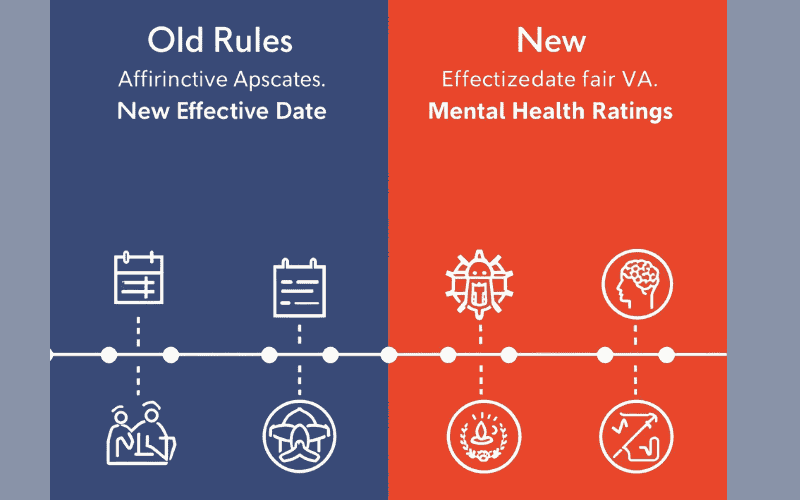
How This Affects New Claims vs. Existing Ratings
Filing a New Claim After the Effective Date
The VA uses new rules to file claims after the effective date or uses five domains to file claims. The new rules prove helpful for veterans because the old system is not beneficial for them. Veterans face memory problems or emotional issues.
Current Ratings—Will They Change?
Ratings do not change automatically but depend on your choice of whether you follow the new rules or the old rules, which are more beneficial for you. Follow the rules that match your condition or situation.
- A review can lead to a higher rating.
- Evidence plays a very important role in rating. Weak evidence also gets a low rating. Therefore, it is very important to find strong evidence in the review process.
Real-World Reactions: Benefits and Worries
What Veterans Are Saying
These are the reactions of veterans.
Relief: Some veterans’ real-life tensions are understood, which brings them relief.
Worry: Some VA’s new rules start arbitrarily, which causes veterans to worry.
Concern about delays: Veterans face delays when systems or rules change.
How to Prepare Your Claim for the New Rules
Gather Evidence That Matches the Five Domains
Keep records and statements so you can observe how your condition affects your daily life.
- Gather Medical records and therapist files.
- Must observe psychological evaluations and test results.
- Daily symptom logs (examples: days you couldn’t leave home, trouble paying bills, memory lapses).
- Collect letters from friends, siblings, or co-workers describing how your condition affects you.
- Employment records are also necessary, which show changes in work performance (if applicable).
Timing—Should You File Now or Wait?
The answer may vary according to the effective date.
- If your evidence and statements are fit according to the old rules, then you can file your first claim from the effective date.
- If the old system is not better according to your issues, then filing after the effective date until the new rules are met is a better option for you. For help, you can consult the veterans service officer’s guidelines.
Practical Tips to Maximize Your Rating
Get Help from VSOs or Accredited Reps
VSO knows the benefits and advantages of both systems.
- Read your files and notes carefully, and if any new evidence can be added, add it.
- Help submit forms correctly.
- Present your evidence in appeals and prove your arguments.

Documentation Is Key
Keep a habit of recording symptoms and their effects. Specific, dated examples help more than vague statements. Examples:
- “On June 12, I couldn’t go to work because I couldn’t focus.”
- “I forgot to pay bills three months in a row.”
- “I have intense anger outbursts that strain family relationships.”
The more concrete and consistent your records, the stronger your claim.
Final Thoughts—What You Can Do Next
This update is an important step toward fairer disability ratings. It recognizes that mental health affects many parts of life—not just job performance. Here are the clear next steps:
- Find out the exact effective date from VA notices or your VSO.
- Gathering evidence consists of the five domains (memory, social life, tasks, daily routines, and emotions).
- Keep symptom logs and get statements from doctors, therapists, and family.
- Talk to a VSO or accredited rep before filing or requesting a review.
- Decide on timing based on whether the new rules or the old rules better match your condition.

What exactly is the new effective date?
It’s the date the VA said it will start using the updated mental health rating rules. (Check VA announcements for the precise calendar date.)
Who will this change affect?
Veterans filing new mental health claims after the effective date and veterans seeking increases.
Will my current rating change automatically?
No. Current ratings stay the same unless you ask for a review or submit new evidence.
Should I file a new claim now or wait?
Talk to a VSO. If your evidence fits the old rules better, file now. If the new rules describe your problems better, consider waiting until the effective date.

Sameya Salman is a writer at The Fit & Fresh who researches and writes about mental health and emotional well-being, with a focus on making topics like high-functioning depression easy to understand. She researches each article using trusted mental health sources to help readers recognize symptoms, understand treatment options, and feel less alone.